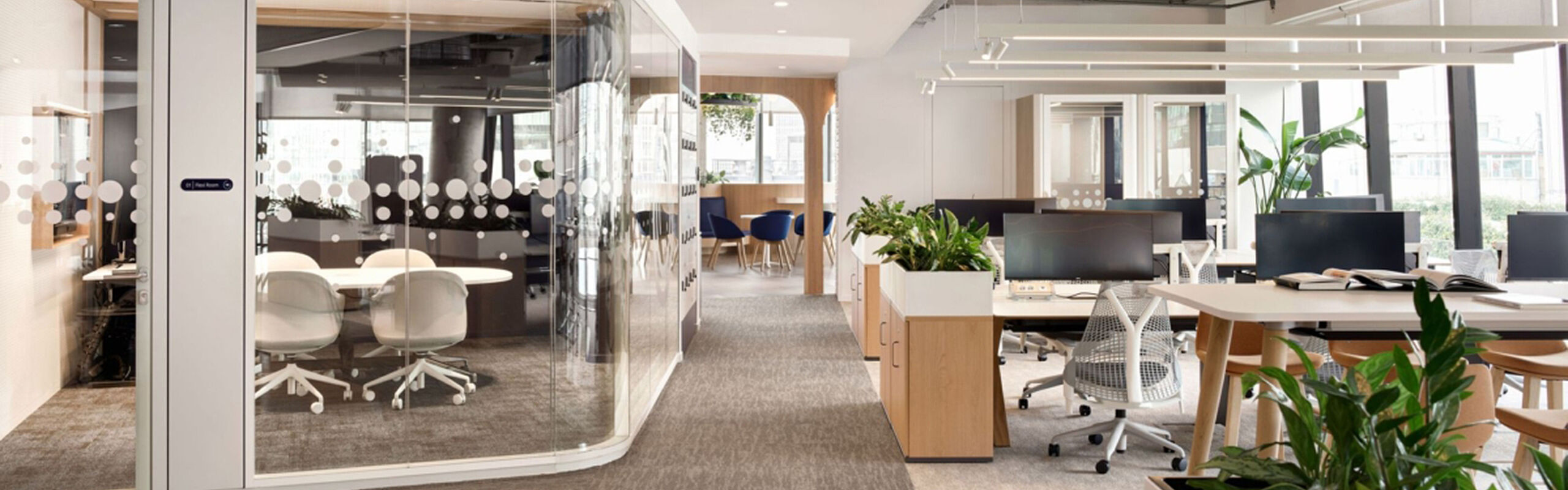
Occupier Services for Office Spaces and Modern Work Environments
Strategically connecting space, location and workplace.
Office spaces are more than square metres, lease agreements and workstations. They influence collaboration, productivity, employer attractiveness, corporate culture and costs. At the same time, hybrid work, desk sharing, sustainability and rising real estate costs are changing the question of how much space companies really need – and how that space should be used.
Looking at office spaces from the user’s perspective
This is exactly where Occupier Services come in: they look at real estate from the perspective of the companies that use it. The focus is not only on the space itself, but on how location, building, organisation and workplace fit together.
coneon supports companies in strategically analysing and assessing office spaces and translating them into functional work environments – with a particular focus on workplace consulting, real estate analysis, space strategy, office planning and implementation.
When office spaces need to be reassessed
Many companies face similar starting points: the lease is coming to an end, the space has become too large, or the office no longer supports hybrid ways of working. Workstations remain unused, while meeting rooms are overbooked. Teams grow, change or increasingly work from different locations.
In moments like these, it is not enough to assess office space only by size, cost or location. What matters is whether a space fits the organisation, is used efficiently and enables a work environment that truly supports everyday work.
These starting points raise central questions:
- How much office space will we really need in the future?
- Does our current location still meet our requirements?
- Should we stay, renovate, expand or relocate?
- How does hybrid work affect our space requirements?
- What spaces do teams need for focus, exchange and collaboration?
- How can our office space become more cost-effective and more attractive at the same time?
Occupier Services help to approach these questions in a structured way and create a reliable basis for decisions around office space, location and workplace.
What does Occupier Services mean?
The term Occupier Services describes services for companies that use real estate themselves, for example as tenants, owner-occupiers or operators of office spaces. In the international real estate context, such companies are also referred to as occupiers.
In a broader sense, Occupier Services can include topics such as real estate strategy, location assessment, space requirements analysis, portfolio optimisation, lease-related questions, workplace consulting, office planning and implementation. Depending on the context, the terms Property Occupier Services or Global Occupier Services are also used.
For coneon, the user perspective is particularly important: What qualities does a space need in order to support the organisation? Which spatial requirements arise from working methods, team structures and corporate goals? And how can this ultimately be translated into a modern work environment that is economically viable and works in everyday use?
Occupier Services with a focus on office spaces
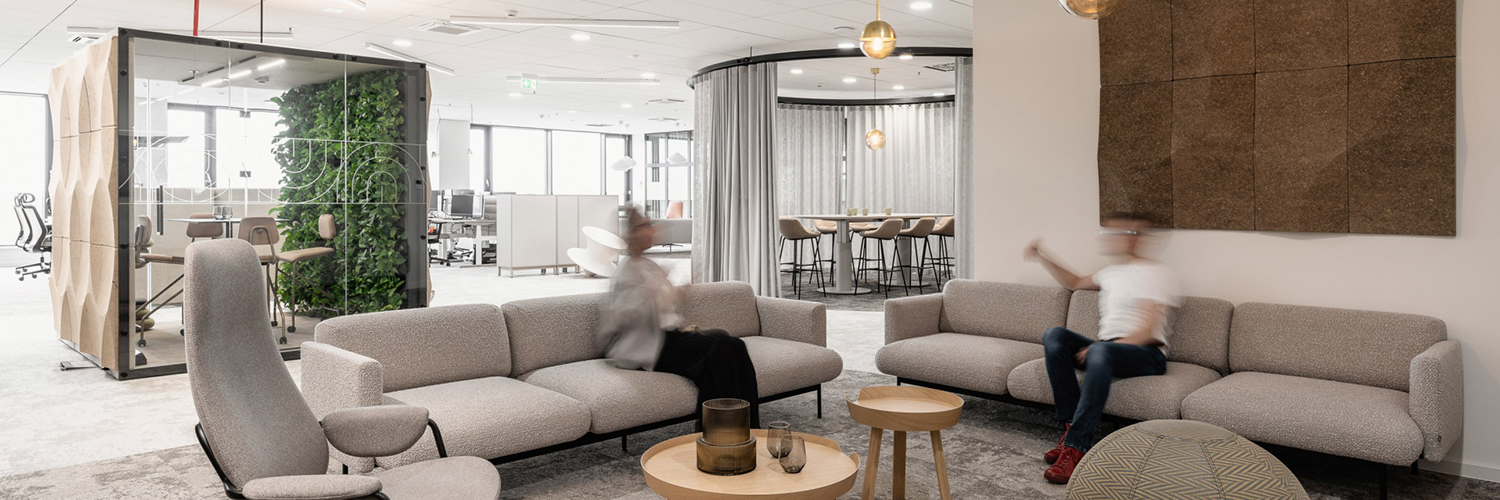
When it comes to office spaces, the question is no longer simply how many workstations are needed. Modern work environments require a more differentiated view: workstations, meeting rooms, retreat areas, project spaces, communication zones, technology, acoustics, lighting, quality of stay and identity all need to work together in a meaningful way.
That is why a good space strategy connects economic requirements with the actual use of the space in everyday work. A space may be sufficient on paper, but still fail in everyday use if its structure does not reflect the organisation’s real needs.
This is where Occupier Services provide orientation: they help companies understand existing office spaces, identify potential and make decisions not only based on square metres, but on use, function and future viability.
How coneon connects space and workplace
At coneon, the user perspective of Occupier Services is primarily reflected in workplace consulting. Office spaces are not considered in isolation, but in relation to the organisation, working methods and future requirements.
An important component of this is real estate analysis. It helps to assess existing spaces, location options or building structures and align them with the requirements of the future workplace. In addition, the focus is on how teams work, which spaces are actually needed and how areas can be organised in a meaningful way.
This creates a basis for decisions around existing spaces, renovations, location changes or new space concepts. The focus is not on the space alone, but on its impact in everyday work: Does it support collaboration? Does it enable concentration? Does it provide orientation? Does it fit what the company will need in the future?
Our view of Occupier Services
Occupier Services can be understood very differently depending on the provider. At coneon, the focus is on the part that becomes directly relevant for the future workplace: the connection between space, location, organisation and use.
Depending on the task, this may include:
- Analysis of existing office spaces
- Space requirements analysis and space calculation
- Office space optimisation
- Assessment of location options
- Workplace analysis and workplace survey
- Workshops with user groups and decision-makers
- Development of workplace strategies
- Office planning and space concepts
- Interior design, furniture and material concepts
- Project management and implementation of modern work environments
The aim is to create a reliable basis for decision-making: for existing spaces, renovations, potential location changes or the development of a new office space.
1. Understanding the starting point
At the beginning, we look at how the existing office space is being used, which areas work well and where bottlenecks arise. This includes space utilisation, spatial structures, working methods, team requirements and potential changes within the organisation.
2. Analysing space requirements
On this basis, we determine which spaces will actually be needed in the future. Hybrid work, desk sharing, growth, team structures, meeting behaviour and different types of activities all play an important role.
3. Assessing location and existing space
When real estate-related questions are relevant, a real estate analysis can help assess existing spaces, location options or building structures. This makes it easier to determine whether a space should be further developed, adapted or rethought.
4. Developing a workplace concept
Analysis and strategy are translated into a concrete workplace concept. It describes which spaces are needed, how areas should be organised and what qualities the new work environment should provide – from focus and exchange to identity, orientation and quality of stay.
5. Preparing planning and implementation
For the strategy to become a functioning work environment, office planning, design, technology, furniture, acoustics, lighting and project management need to work together. This ensures that the new space is not only conceptualised, but can also be realised.
Optimising office space instead of reducing space
Space optimisation is often equated with cost savings. In reality, however, it is not only about using less space, but about using existing spaces more effectively.
An optimised office space creates the right balance between efficiency and quality. It reduces vacancy, avoids incorrect allocation and at the same time creates space for the activities that actually take place in the office: focused work, exchange, project work, confidential conversations, encounters and collaboration.
This creates a work environment that is economically viable while also supporting employees in their everyday work.
The location also plays a role
How office spaces are assessed and developed also depends on their location. In markets such as Düsseldorf and Frankfurt, factors such as accessibility, building structure, rent levels, expansion opportunities and proximity to employees, clients and partners play an important role alongside the space itself.
Occupier Services help bring these location factors together with the requirements of the organisation. This creates a sound basis for decision-making: whether an existing office space should be adapted, a location further developed or a new space planned.
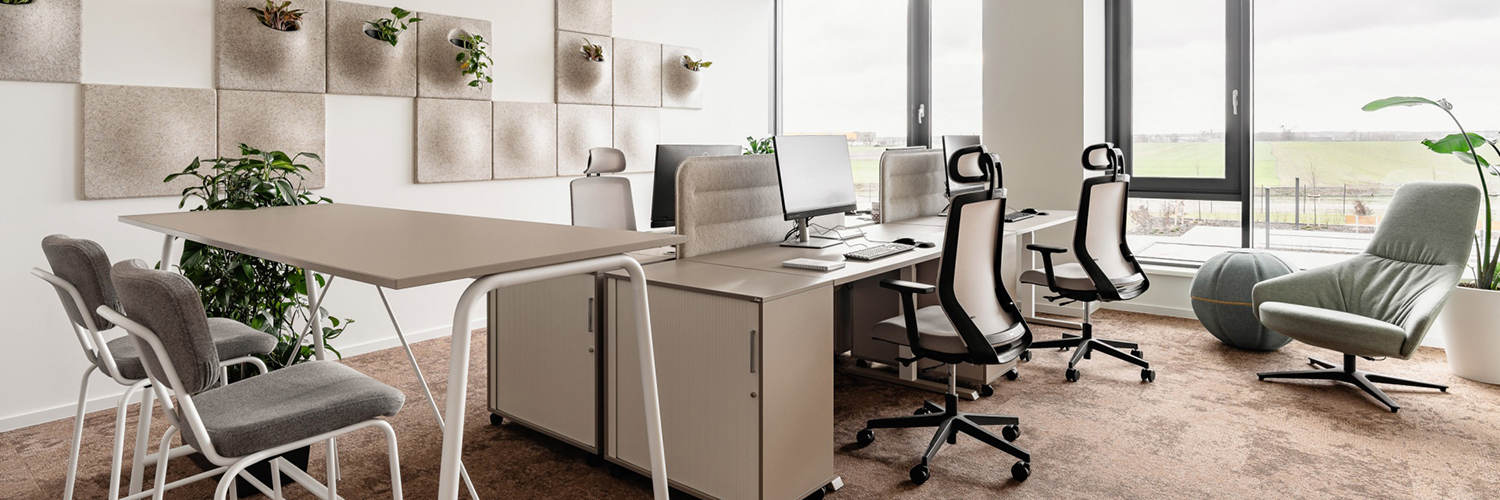
Sustainability and ESG in office space strategy
Sustainability also plays an important role in the assessment and development of office spaces. Office spaces tie up resources, for example through fit-out, materials, energy consumption, furniture and ongoing operations. At the same time, many companies are asking how existing spaces can be used more effectively, further developed or adapted to new requirements.
A sustainable office space strategy therefore does not begin with individual materials. It begins with the question of how much space is really needed, how long it can remain in use and how flexibly it can respond to change.
This includes efficient space utilisation, durable spatial concepts, resource-conscious material and furniture concepts, health-promoting work environments and technical solutions for hybrid collaboration.
In this way, sustainability is not understood as an add-on, but as part of a future-proof workplace.
Who are Occupier Services relevant for?
Occupier Services are particularly relevant for companies that want to reassess, change or further develop their office spaces. This includes organisations planning a location change, facing an expiring lease or working with a current space that no longer supports the way they work.
A structured assessment can also be useful in situations involving growth, reorganisation, desk sharing, hybrid working models or the desire for greater space efficiency. The key question is always whether space, location and workplace still meet the company’s requirements.
Occupier Services in Düsseldorf and Frankfurt
coneon supports companies in Düsseldorf, Frankfurt and beyond with questions relating to office spaces, workplace consulting and the development of modern work environments. Especially in dynamic real estate markets, it can be helpful to consider space, location and use together rather than separately.
Whether existing space, renovation, location change or a new space concept: a sound analysis creates clarity on which solution is economically viable and what kind of work environment will be needed in the future.
Frequently asked questions about Occupier Services:
The following questions provide initial guidance on terms, use cases and possible decision-making foundations around office space, location and workplace.
Occupier services are services provided to companies that use property themselves. Depending on the provider, these may include, for example, office space consultancy, location strategy, space requirements analysis, workplace consultancy, office planning, project management and the optimisation of existing space.
The term occupier refers to companies that use property themselves – for example, as tenants, owner-occupiers or operators of office space. The focus is not on the property as an investment, but on its function as a place of work and a business location.
Property Occupier Services refer to services for companies wishing to strategically plan, optimise or further develop their commercial properties. These may include office space, administrative premises or other business premises.
Global Occupier Services usually refer to internationally oriented services for companies with multiple sites or cross-border property portfolios. These services include, amongst other things, location strategy, portfolio management, space utilisation and workplace concepts.
Occupier Services are relevant for companies that wish to use, alter, expand, reduce or redesign their office space. They are particularly useful in the event of relocations, expiring leases, hybrid working models, desk sharing or the development of modern working environments.
Workplace Consulting helps to link property-related issues with the way an organisation actually operates. It identifies which spaces are needed, how areas can be organised effectively, and what kind of working environment supports day-to-day operations.
A property analysis examines existing spaces, location options or building structures and assesses them in terms of future requirements. In the context of workplace consultancy, it can help to inform decisions regarding existing properties, refurbishments, relocations or new space concepts.
Occupier Services analyse how office space is used and what space requirements will arise in the future. This enables measures to be identified to make the use of space more efficient, flexible and appropriate – for example, through desk sharing, new spatial layouts, quiet working areas or improved communication spaces.
A space requirements analysis is worthwhile when companies are unsure how much office space they will need in the future. This is particularly common in the context of hybrid working, growth, restructuring, relocations or expiring leases.
coneon supports companies in Düsseldorf with matters relating to office space, workplace consultancy, space strategy and modern working environments. Depending on the specific requirements, services such as property analysis, space requirements analysis, office space optimisation, office planning and implementation may be relevant.
coneon helps companies in Frankfurt to assess office space from the perspective of both users and the working environment. A structured analysis can provide a sound basis for decision-making, particularly when it comes to relocations, hybrid working models, desk sharing, space optimisation or office expansion.
Sustainability plays an important role because office spaces should be planned in a way that conserves resources, is efficient and can be used in the long term. This includes the further development of existing spaces, flexible usage concepts, durable materials, energy-efficient solutions and a well-considered space strategy.
Is your office space up for discussion?
Whether it’s an existing property, a refurbishment, a relocation or a new space concept: coneon considers space, location and the working environment as a whole, laying the groundwork for well-informed decisions.