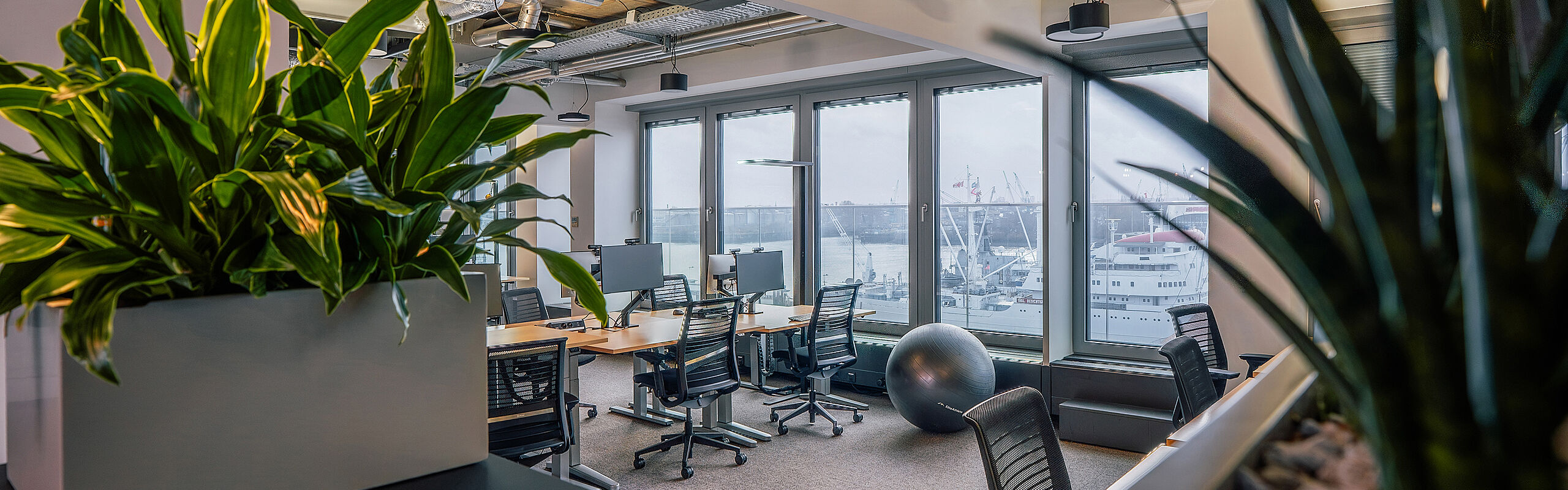
Desk Sharing
How Companies Benefit from Flexible Office Structures
The way we work has fundamentally changed in recent years. Traditional office layouts with permanently assigned desks are increasingly being replaced by flexible and hybrid working models. Companies are now faced with the challenge of using office space efficiently while meeting employees’ expectations for flexibility, collaboration and autonomy.
A key element of modern workplace environments is the desk sharing concept. Desk sharing enables organizations to optimize space utilization, reduce costs and create agile work environments. In this article, we explain what desk sharing is, which models exist, the benefits it offers and what companies should consider when implementing it.
What is Desk Sharing?
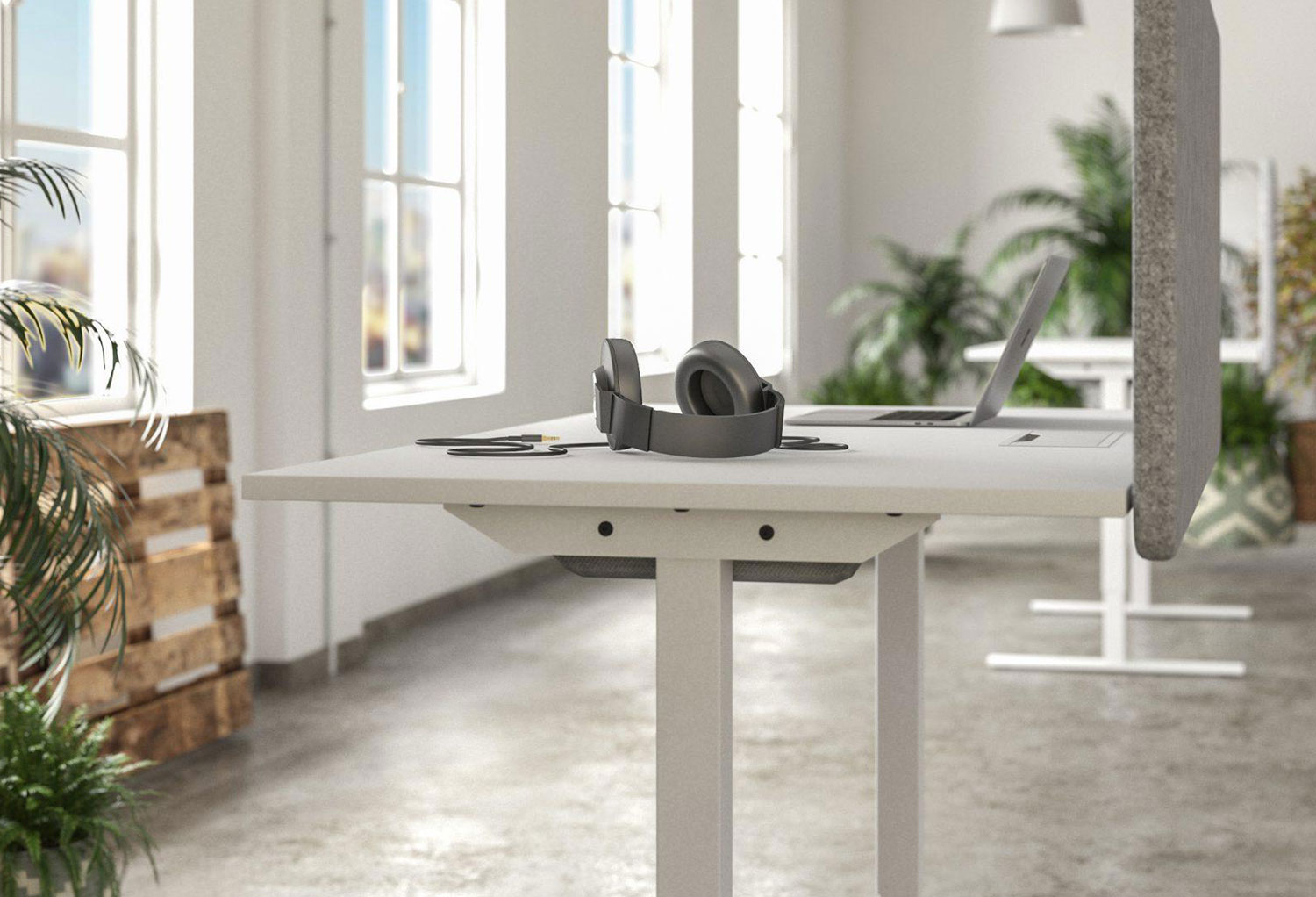
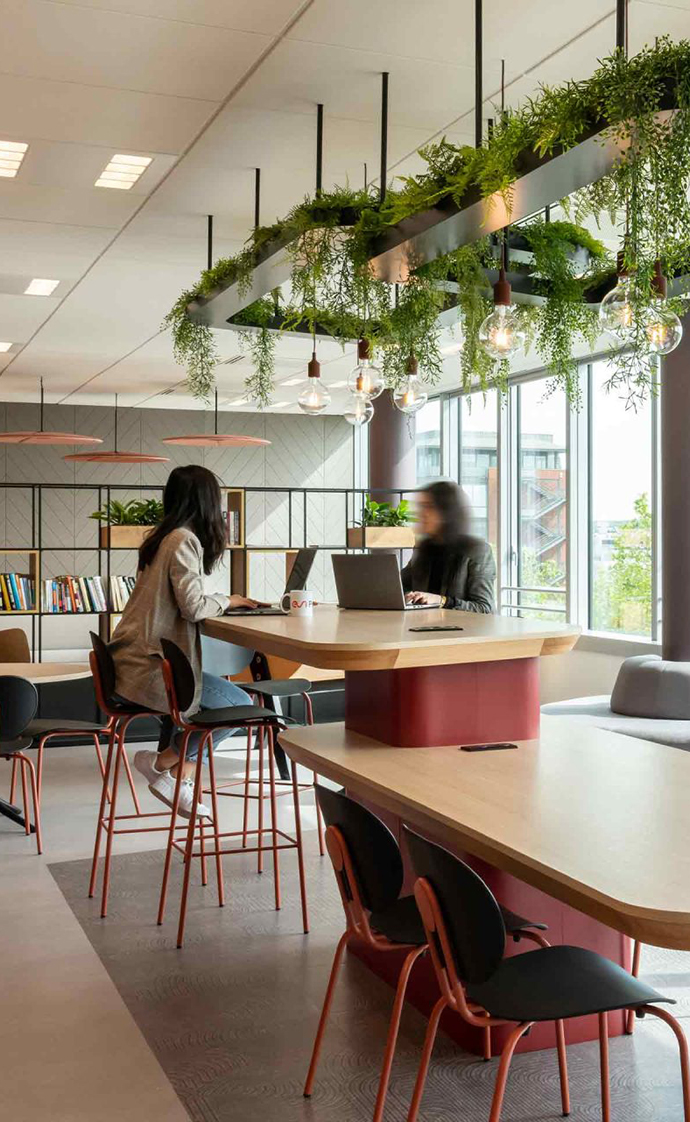
Desk sharing is a workplace strategy in which desks are no longer permanently assigned to individual employees. Instead, workstations are shared flexibly by multiple employees depending on presence, task or project requirements.
By sharing workstations and office space, companies can use their space more efficiently and reduce costs. At the same time, desk sharing enables employees to choose their workspace according to their specific tasks or team constellation, allowing for greater flexibility and productivity.
What Desk Sharing Models Exist?
Desk sharing can be implemented in various formats. The appropriate model depends on company size, working methods and organizational culture.
- Hot Desking: In this model, there are no permanently assigned desks. Employees select any available workstation for the duration of their working day.
- Team-Based Desk Sharing: In this approach, members of a team share a defined number of workstations. This strengthens team cohesion and improves information flow.
- Department-Level Desk Sharing: In larger organizations, desk sharing can be organized at department level. Resources are utilized efficiently while fostering collaboration within the department.
There is no one-size-fits-all desk sharing model. The concept must be tailored to the specific needs, workflows and cultural framework of the organization. Only a customized workplace strategy and individually designed work environment ensure efficient and flexible daily operations.
Benefits of Desk Sharing
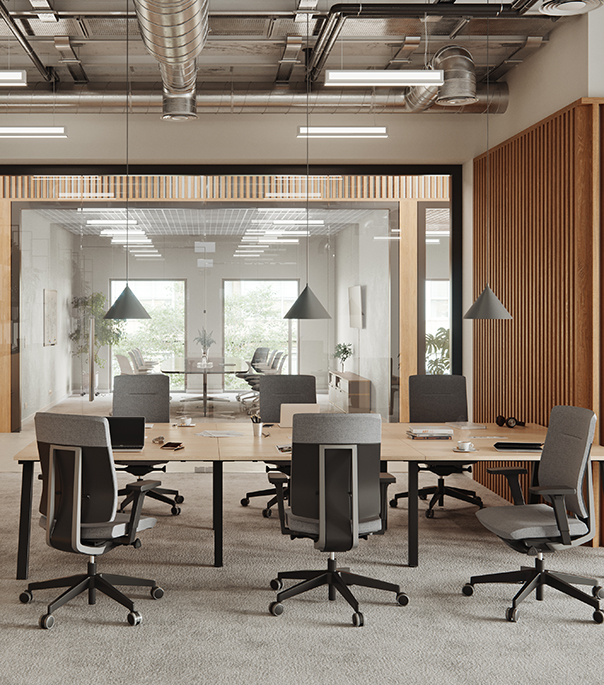
Desk sharing is a forward-looking workplace strategy that enables companies to use office space efficiently while supporting flexible ways of working. Its benefits include optimized space utilization, adaptability to hybrid working models and the promotion of a modern corporate culture. A strategically planned desk sharing concept increases productivity, reduces costs and strengthens employer attractiveness in the long term.
Benefits of desk sharing for employees
- Flexibility: Shared desks allow employees to choose their workspace based on task, project and personal preference — whether a quiet focus area or a collaborative team zone.
- Collaboration and Networking: Changing seating arrangements encourage spontaneous interaction, cross-department collaboration and knowledge exchange, fostering innovation.
- Task-Oriented Working: Desk sharing enables employees to select the most suitable workspace for their activity — for example, sitting near project partners or retreating to a quiet area for concentrated work.
- Innovative Work Environment: A professionally implemented desk sharing concept signals trust, autonomy and flexibility, increasing motivation and engagement.
Benefits of Desksharing for Employers
- Cost Efficiency: Desk sharing reduces the number of permanently required workstations, lowering rent, operating costs and investment in office furniture.
- Space Efficiency: Especially in hybrid work environments, desk sharing prevents vacancy and enables data-driven space planning.
- Adaptability: Organizations can respond flexibly to growth, workforce changes or new working models without major restructuring.
- Employer Branding: Modern workplace concepts such as desk sharing enhance employer attractiveness. Flexible working models are a key factor in attracting and retaining talent.
Desk sharing combines economic efficiency, sustainability and contemporary work culture. When implemented correctly, it creates a high-performing and future-ready work environment.
Webinar recording on the topic of desk sharing
‘Musical chairs in the office’ – fewer desks than employees
Karsten Kossatz, founder of independesk, the Airbnb of the working world, and known from the TV show ‘Höhle der Löwen’ (The Lion's Den), explains how to make optimal use of your own office capacity and cushion peaks with a flexible concept of workspaces in the neighbourhood.
Watch webinar (German)
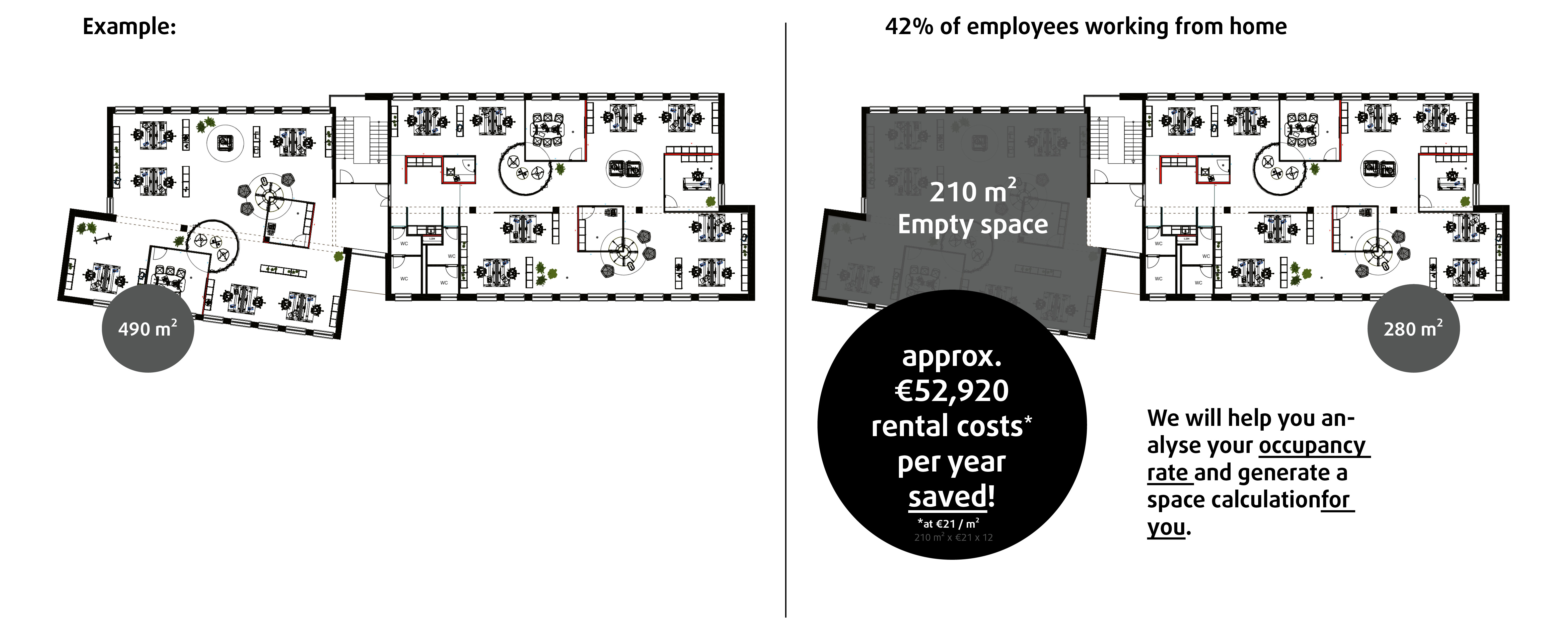
Cost Savings Through Desk Sharing and Optimized Space Utilization
Desk sharing is an effective lever for reducing office space and sustainably lowering rental and operating costs. In hybrid work models, not all employees are present simultaneously. Desk sharing enables companies to align workstation numbers with actual attendance rates.
A strategically designed desk sharing concept increases space efficiency, avoids vacancy and optimizes investment in office infrastructure. At the same time, the work environment remains modern, flexible and demand-oriented. A comprehensive occupancy analysis forms the foundation for economically sound space calculations. In this way, desk sharing becomes a key instrument for cost efficiency and future-proof office planning.
What is the Desk Sharing Ratio and How is it Calculated?
A central management metric in desk sharing is the desk sharing ratio. It describes the relationship between the number of employees and the number of available workstations.
In desk sharing models, the number of desks is intentionally lower than the number of employees to optimize space utilization.
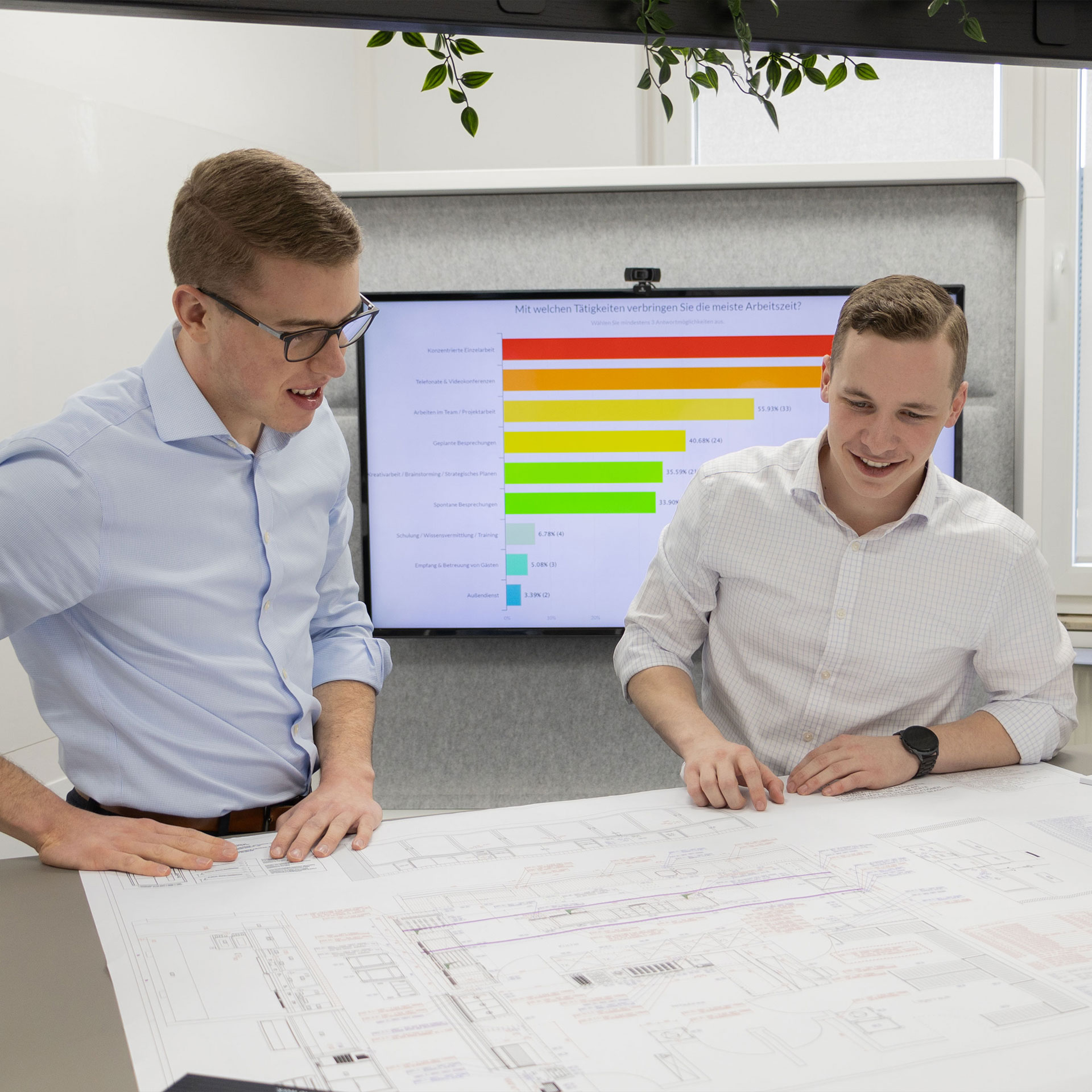
The ideal ratio is based on real attendance data, working patterns and organizational requirements. It can be calculated using occupancy analyses, attendance statistics or workforce management software.
Example:
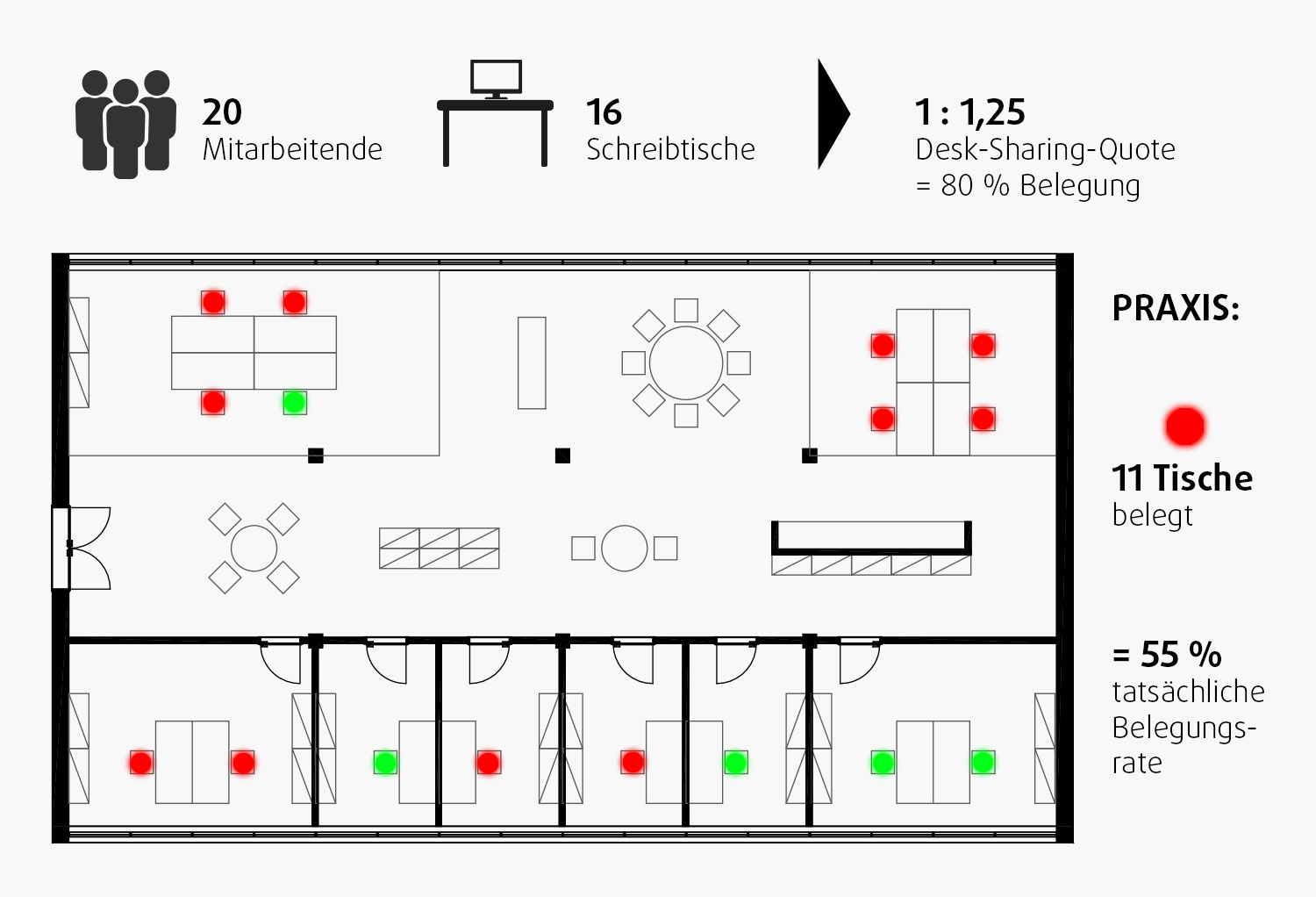
A desk sharing ratio of 1:1.25 means that 20 employees share 16 desks, corresponding to an 80% occupancy rate.
The optimal ratio is organization-specific and should be determined through data-driven analysis to ensure both cost efficiency and seamless workstation availability.
How Relevant is a Booking System for Effective Desk Sharing?
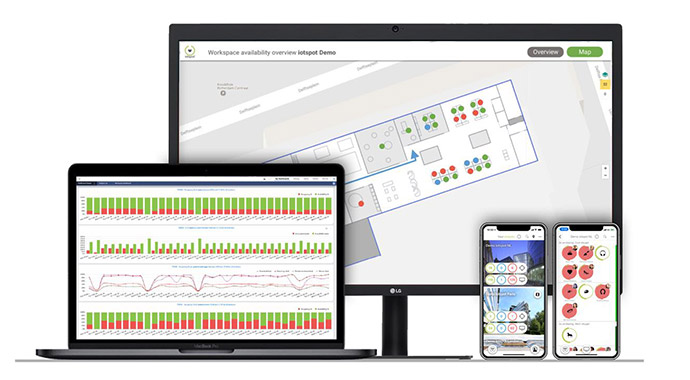
A digital booking system is a critical success factor for professional desk sharing. Modern desk booking software allows employees to reserve workstations flexibly and view real-time occupancy levels. This makes desk sharing transparent, predictable and conflict-free.
In addition, booking systems provide valuable usage data for continuous optimization. Companies gain detailed insights into space utilization and can adjust their desk sharing ratio accordingly.
A robust booking system makes desk sharing not only operationally feasible but strategically manageable — significantly contributing to both economic performance and user acceptance. Find out more about our partner's booking software here.
What Should Companies Consider When Introducing Desk Sharing?
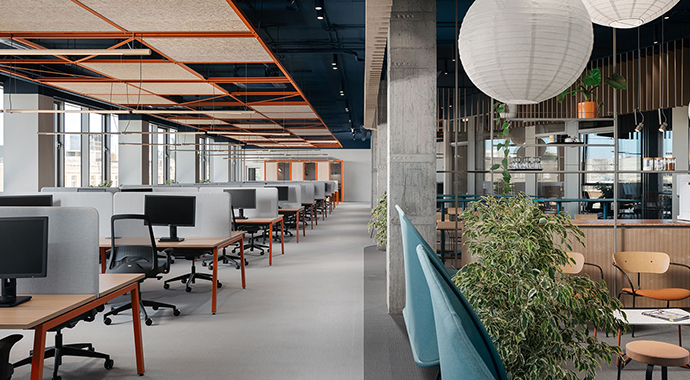
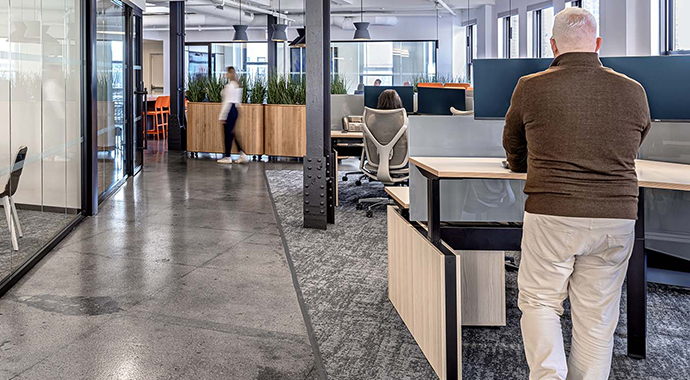
Introducing desk sharing requires clear strategic planning and a realistic assessment of potential challenges. Desk sharing is far more than reducing the number of desks — it is a comprehensive change process affecting space, organization and corporate culture.
Successful desk sharing requires ergonomic workstations, modern IT equipment, stable networks, digital booking systems and sufficient storage solutions such as lockers or mobile storage. Clearly defined zones for focused work, teamwork and informal exchange are equally important.
Transparent communication is essential. Concerns about privacy, personalization or workstation availability must be addressed proactively. Clear rules and early employee involvement significantly reduce resistance.
A common misconception is that desk sharing eliminates established team structures. Individually developed concepts allow for team-based seating arrangements or defined sharing zones. With a realistic desk sharing ratio and efficient booking software, “musical chairs” scenarios can be avoided. A data-driven analysis of workflows, attendance rates and organizational needs forms the foundation for success. Desk sharing works sustainably only when it is strategically planned, transparently communicated and developed collaboratively with employees.
How Can Companies Reduce Employee Concerns About Desk Sharing?
For many employees, giving up a permanently assigned desk can initially feel unfamiliar. Concerns about privacy, organization and availability are understandable.
These concerns can be addressed through clear guidelines, personal storage solutions, booking systems and open communication. Once employees experience the advantages of desk sharing, initial skepticism often turns into acceptance.
Desk Sharing Checklist
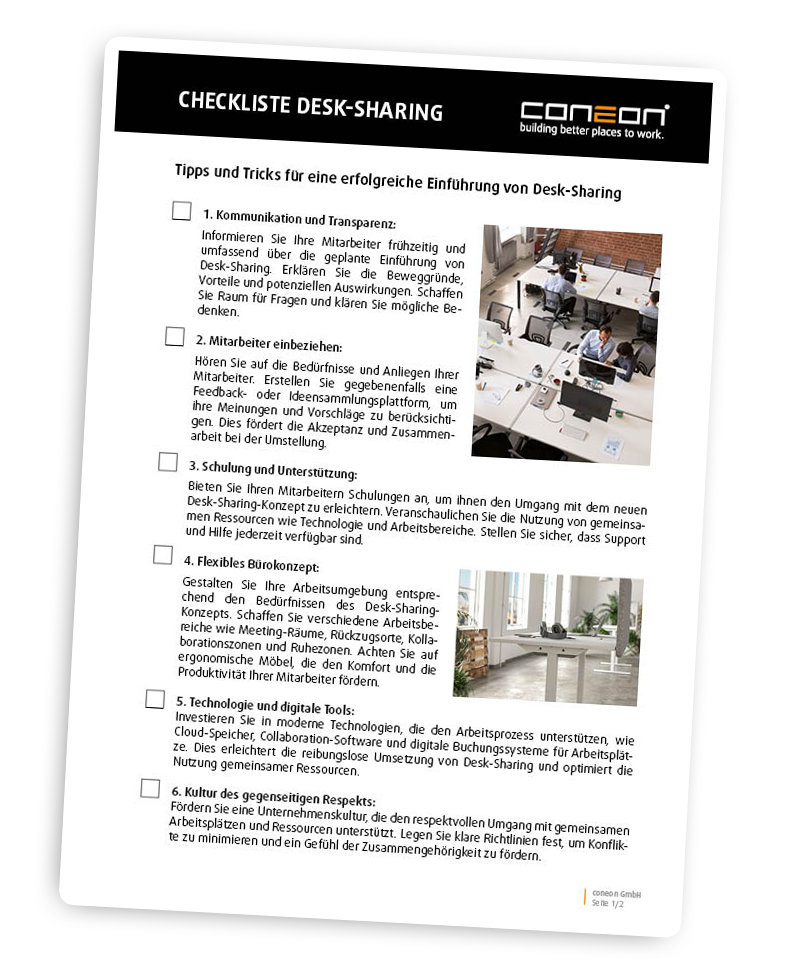
Transitioning to desk sharing can feel challenging for some employees. Our desk sharing checklist outlines the key steps required for a successful implementation and helps reduce concerns during the change process.
What Does Successful Desk Sharing Implementation Look Like?
Successful implementation requires careful planning, robust infrastructure and clear strategic alignment. Desk sharing should not be viewed as a short-term adjustment but as a long-term development process within modern workplace environments.
Key success factors include:
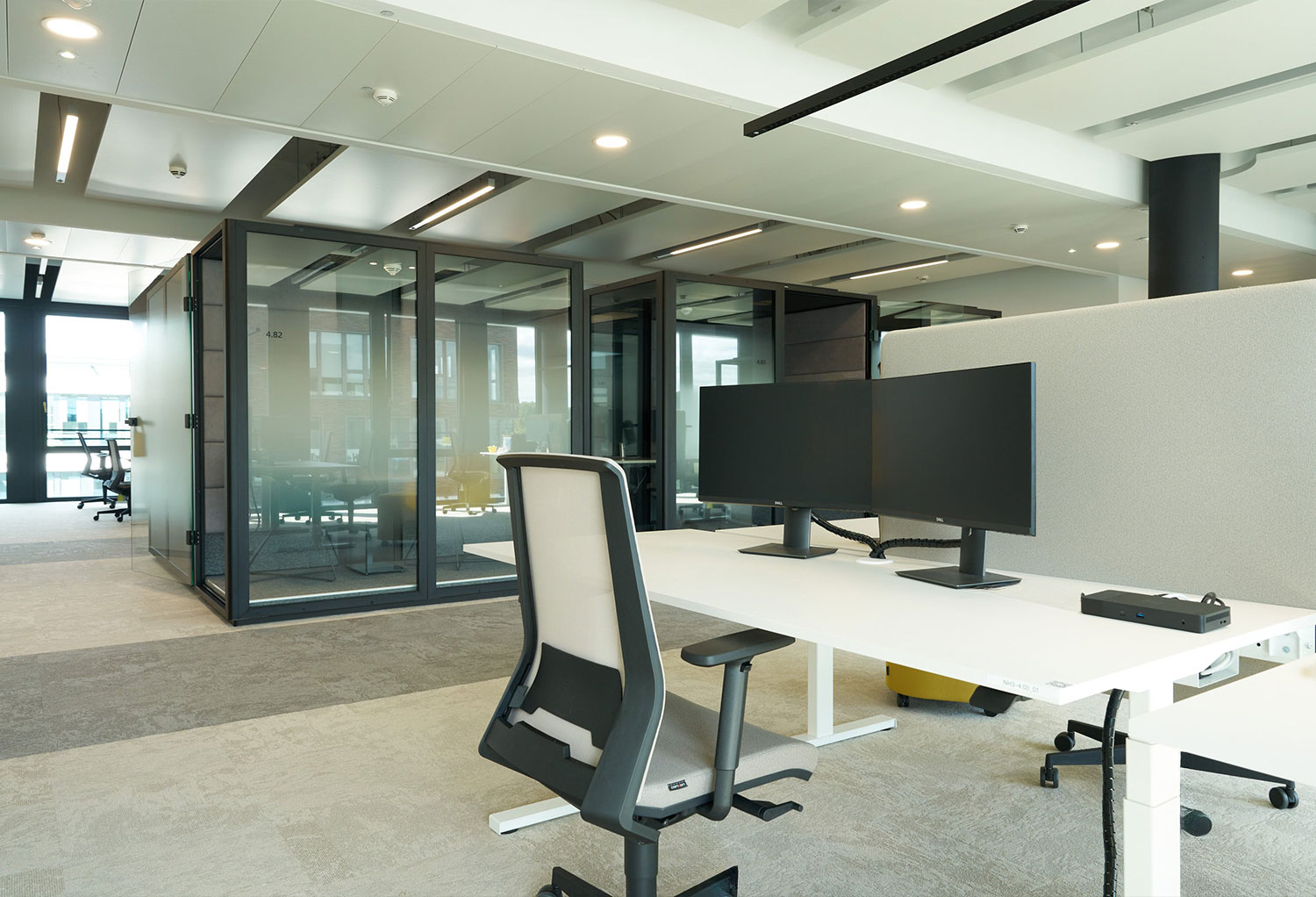
- Infrastructure: ergonomic workstations, high-performance IT infrastructure, stable networks and digital booking systems.
- Communication and Training: transparent communication, clear guidelines and employee training to ensure orientation and acceptance.
- Flexible Office Concept: spatial zoning that supports different work modes such as focused work, collaboration and informal interaction.
- Continuous Optimization: regular feedback and data-driven adjustments to ensure long-term economic and operational success.
Desk Sharing with coneon
coneon supports companies holistically in the implementation of desk sharing — from workplace analysis and strategic concept development to practical execution. With customized office concepts, we help organizations use space efficiently, integrate flexible working models and ensure employee acceptance. Together, we create modern work environments where desk sharing sustainably combines flexibility, efficiency and well-being.
Frequently asked questions about desk sharing:
The introduction of desk sharing initially raises questions in many companies – regardless of whether it concerns organisation, personal working habits or the use of shared spaces. Transparent information is therefore a key success factor.
Employees can book their workplace using special reservation tools or software that allow them to select an available space for a specific period.
Privacy can be improved by acoustic partitions or flexible room design elements. It tends to be less in the shared desk concept than with fixed workstations.
Workplace safety can be ensured through clear safety guidelines, access controls and training to ensure that employees use their working environment safely.
The maximum number of employees that can share a workstation depends on the size of the office and the equipment available. However, there are often guidelines to prevent overcrowding.
The IT infrastructure should be flexible and adaptable to meet the needs of changing users. This includes the provision of laptops, wireless internet access and a secure network.
Desk sharing promotes spontaneous and collaborative working when employees are at different workstations. The use of shared areas can facilitate informal communication and teamwork.
Companies should establish clear guidelines for the use of shared workspaces, including cleanliness, personal responsibility and consideration for other users.
Durch regelmäßiges Feedback, Mitarbeiterbefragungen und eine flexible Gestaltung der Arbeitsumgebung können Unternehmen sicherstellen, dass die Bedürfnisse der Mitarbeitenden im Shared Desk-Konzept berücksichtigt werden.
These questions are a good starting point for companies to inform their employees about the switch to desk sharing and allay any concerns they may have. By providing clear and precise answers, companies can promote understanding and acceptance of desk sharing. Do you have any further questions?
Get in touch now!
Let us shape the future of your office work together – contact us for a personal consultation and joint planning.