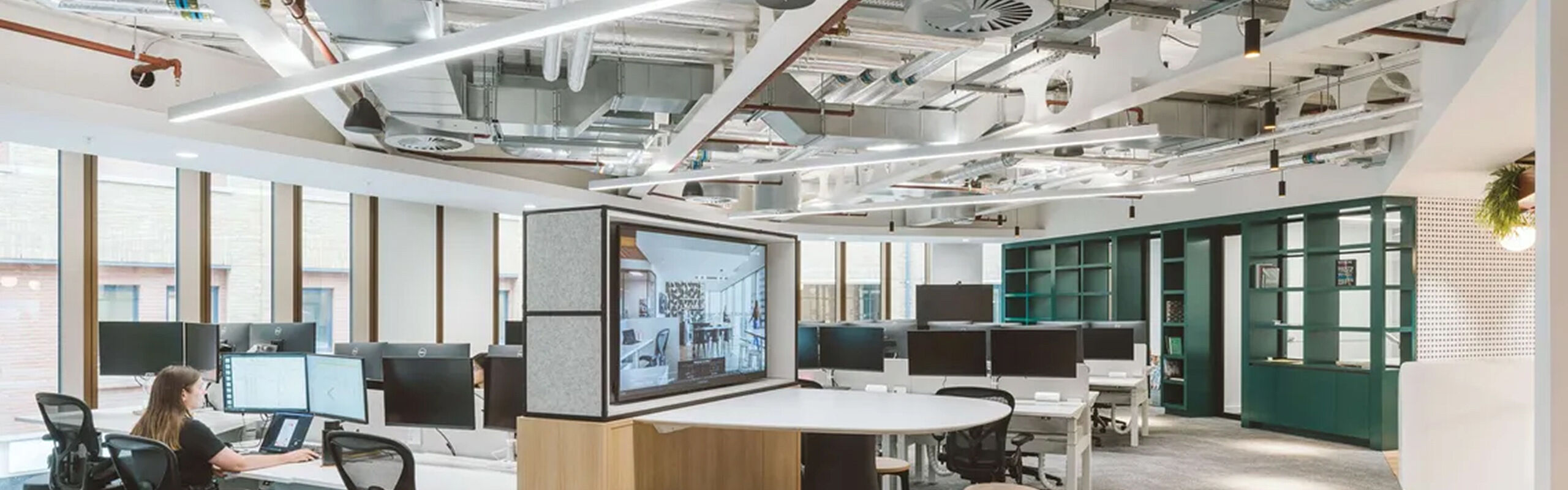
Workplace Lighting Regulations
Requirements, Lux Levels and Standards
Which workplace lighting regulations apply in offices? How high must illuminance levels (lux) be at the workplace, and what role do ASR, workplace regulations and DIN standards play in practice?
Lighting: The Right Light in the Office
Workplace lighting is clearly regulated, yet often underestimated. At the same time, it has a significant impact on employees’ health, performance and overall well-being.
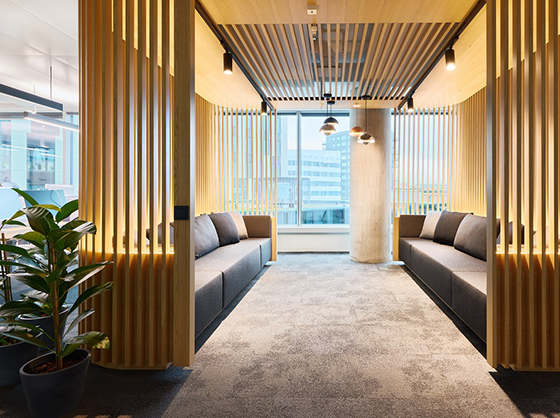
Workplace Lighting: Regulations According to ASR and Workplace Ordinance
Workplace lighting in Germany is defined by several key regulations: the Workplace Ordinance (ArbStättV), the Technical Rules for Workplaces (ASR A3.4 Lighting), and DIN EN 12464-1 for lighting of indoor workplaces. These regulations specify that employers must ensure sufficient illuminance, glare-free lighting, balanced brightness levels and individually adjustable lighting systems. Adequate daylight and a visual connection to the outside are also mandatory.
The ASR further specifies the requirements of the Workplace Ordinance. Compliance with ASR guidelines generally ensures compliance with legal requirements. The objective is to create safe, healthy and performance-enhancing working conditions that meet both ergonomic and visual requirements.
How Many Lux Does a Workplace Need? (Office Lighting Levels According to DIN)
One of the most frequently asked questions regarding workplace lighting is: how many lux are required in an office?
DIN EN 12464-1 provides clear guidelines. For standard office work with screens, a minimum of 500 lux is required. For more demanding tasks, illuminance levels may increase to 750–1,000 lux. In practice, individual differences also play a role. Older employees often require higher lighting levels of up to 1,500 lux for comfortable working conditions.
It is essential that illuminance is always adapted to the specific task rather than applied uniformly across the entire space. A common mistake is keeping the room too dark while relying solely on screen brightness, which leads to increased eye strain and faster fatigue.
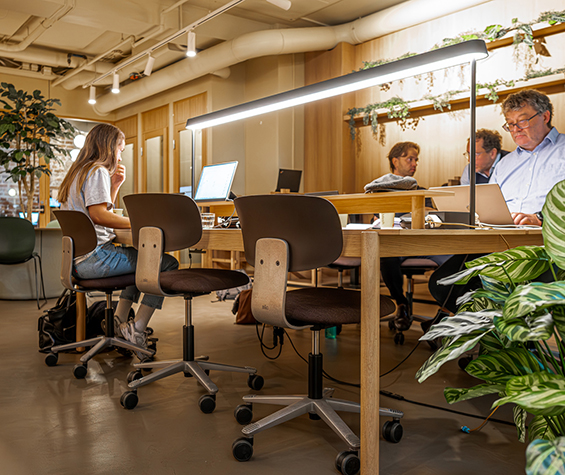
Definition of Light
Visible light consists of electromagnetic waves within a spectrum of approximately 380 to 780 nanometers. Light color (color temperature) is measured in Kelvin, while brightness (illuminance) is measured in lux. For reference, outdoor daylight can reach up to 100,000 lux on a sunny day, while dark, overcast conditions may only provide around 1,000 lux. Conventional fluorescent lamps typically have neutral white light at around 4,000 Kelvin, while daylight white ranges from 5,000 to 6,000 Kelvin.
More about workplace guidelines
Lighting at the Workplace: Definition of Lux, Light Color and Illuminance
To better understand workplace lighting requirements, it is helpful to clarify key terms. Light is electromagnetic radiation within the visible range of approximately 380 to 780 nanometers. Illuminance, measured in lux, describes how much light reaches a surface. Light color, measured in Kelvin, significantly influences perception and the effect of light.
For comparison, outdoor daylight can reach up to 100,000 lux, while typical office environments aim for 500 to 1,000 lux. Neutral white light at around 4,000 Kelvin is suitable for focused work, while daylight white (5,000–6,500 Kelvin) can have an activating effect and enhance alertness.
Poor Lighting at the Workplace: Effects on Health and Performance
Poor lighting conditions have a direct impact on health and performance. Common consequences include headaches, eye strain, reduced concentration and rapid fatigue.
Muscular tension can also develop when employees unconsciously adjust their posture to avoid glare. A key aspect of ASR workplace lighting is therefore the prevention of glare. This includes both direct glare, for example from bright light sources or windows within the field of view, and reflected glare caused by reflections on screens. Both types impair visual performance and must be minimized.
It is also important to ensure evenly distributed lighting without dark zones, as this reduces strain on the eyes by minimizing constant adaptation. At the same time, a certain level of shadow is necessary for visual comfort.
Questions About Office Planning or Workplace Regulations?
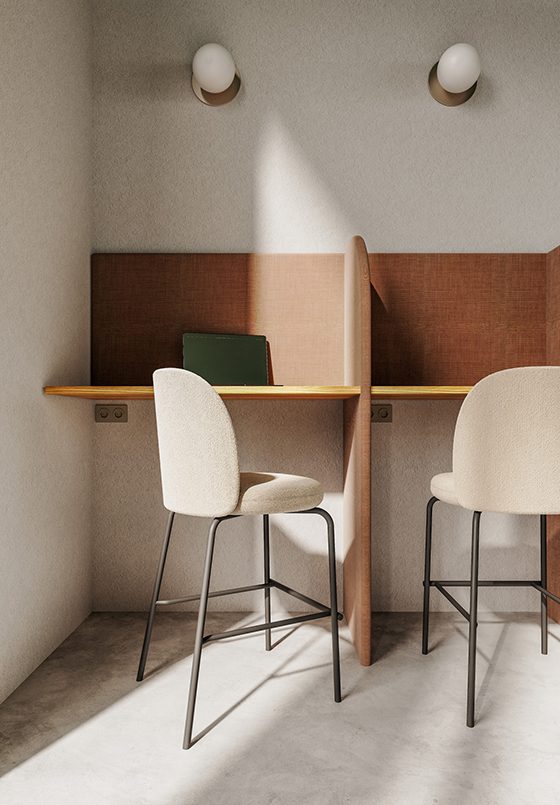
Daylight at the Workplace: Requirements According to the Workplace Ordinance
In addition to artificial lighting, daylight plays a crucial role. The Workplace Ordinance requires that workspaces receive sufficient daylight and provide a visual connection to the outside. Daylight regulates the human circadian rhythm and contributes significantly to concentration, performance and well-being.
The proportion of daylight in a space can be determined using the daylight factor, which describes the ratio between indoor and outdoor illuminance. In smaller rooms, this value should be at least 2%. A higher daylight share significantly improves working conditions.
Sun Protection and Glare Prevention at the Workplace
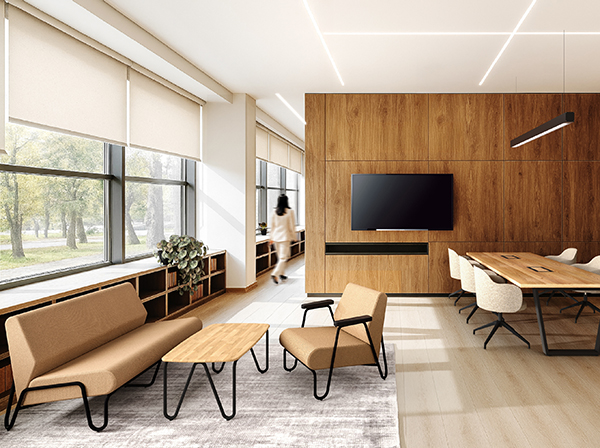
Too much daylight can be just as problematic as too little. Direct sunlight can cause glare, strain the eyes and reduce concentration. Therefore, ASR guidelines require adjustable shading systems.
Even minor glare on screens can have a significant impact, as users unconsciously adjust their posture to avoid it. This can lead to incorrect posture and strain in the shoulders, neck and back.
When selecting suitable shading systems, factors such as climate conditions, building design, window size, glazing type and orientation must be considered.
Available solutions include:
- Awnings
- Roller blinds
- External venetian blinds
- Shutters
- Venetian blinds
- Vertical blinds
- Panel curtains
- Sliding shading elements
- Solar control glazing
- Integrated shading systems between glass panes
In practice, a combination of external and internal shading systems has proven effective. For example, external horizontal louvers can reduce heat gain, while internal vertical blinds allow flexible glare control.
To minimize glare, workstations should ideally be positioned parallel to windows.
Effective shading systems should:
- prevent direct glare
- avoid reflections on screens
- ensure sufficient contrast on displays
- prevent disruptive shadow patterns
- maintain a view outside
- be easy and individually adjustable
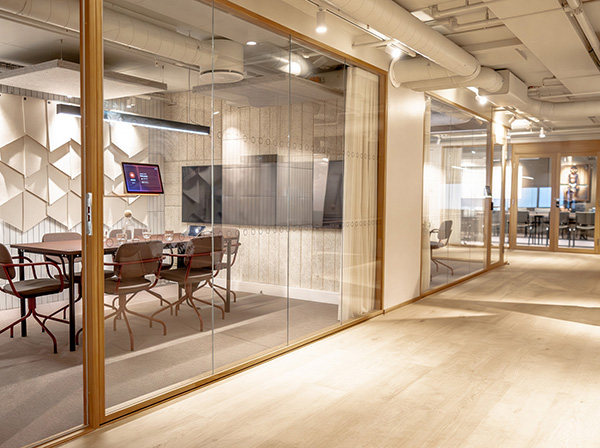
Artificial Lighting in Offices: Requirements and Solutions
Artificial lighting complements daylight and becomes essential under insufficient natural lighting conditions. Not only the amount of light but also its quality is crucial. The space should be evenly illuminated without being too bright or too dim. Lighting must also be adaptable to different tasks and individual needs.
Different types of artificial lighting can be distinguished:
Direct and indirect luminaires
Direct and indirect luminaires use diffusing materials such as opal covers or microprisms to create homogeneous, glare-free lighting, making them ideal for office environments.
Halogen lamps
Halogen lamps produce brilliant, focused light but are considered outdated due to their high energy consumption and are now largely replaced by more efficient technologies.
LED lighting
LED lighting is the current standard. It offers high energy efficiency, long lifespan and flexible control. High-quality LEDs provide excellent color rendering, low heat output and adjustable light color.
Biologically effective lighting, in the sense of Human Centric Lighting, is particularly relevant for modern work environments. Its aim is to support the positive effects of daylight on the human body. Key factors include sufficient illuminance levels, an appropriate spectral composition—especially with blue light components—and a dynamic adjustment of light color and intensity throughout the day.
Dynamic LED lighting systems can meet these requirements by varying both color temperature and illuminance over the course of the day. In this way, the circadian rhythm is supported, promoting both well-being and performance.
Lighting Concepts and Systems in Offices: Direct, Indirect and Individual
An effective lighting concept is based on the combination of different light sources and layers. Uniform general lighting provides orientation, while individually adjustable task lighting allows users to adapt lighting to their personal needs.
Direct lighting
Direct lighting is focused on work surfaces and supports concentrated tasks. Proper, glare-free positioning is essential to prevent reflections on screens.
Indirect Lighting
Indirect lighting creates a balanced and pleasant spatial atmosphere while reducing glare. It provides a visually calm environment and enhances the overall impression of the space.
Combination as the Optimal Approach
The combination of direct and indirect lighting is particularly effective. While direct light illuminates specific work areas, indirect light ensures balanced overall brightness.
By adding individually adjustable task lighting, employees can adapt lighting to their specific tasks and personal preferences – a key factor for ergonomic and productive working conditions.
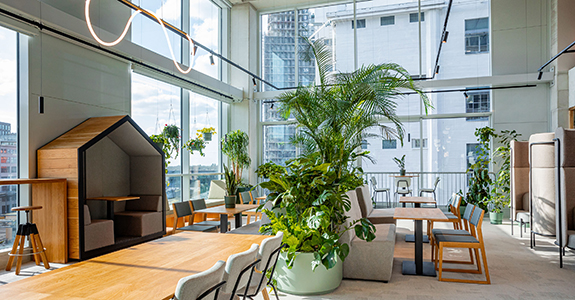
Modern Lighting Systems and Energy Efficiency
Modern lighting systems go far beyond traditional solutions. Dynamic lighting systems adapt to the course of the day and support circadian rhythms. Sensor-based systems detect occupancy and daylight availability, automatically adjusting lighting levels. This improves both comfort and energy efficiency.
Energy-Efficient Lighting Concepts in Offices
Energy-efficient lighting plays a central role in modern workplace design. The goal is to reduce energy consumption without compromising visual quality or ergonomics.
Especially in screen-based workplaces, balanced lighting is essential for health, concentration and performance.
A sustainable lighting concept therefore combines energy efficiency with user-oriented lighting design and considers both daylight and artificial lighting.
Key measures for energy-efficient lighting concepts in offices include:
- Optimal use of daylight to reduce artificial lighting
- Bright interior design with matte surfaces to improve light reflection
- Use of energy-efficient luminaires with high efficacy
- Presence and motion sensors to control lighting based on demand
- Regular maintenance and cleaning of luminaires to maintain light output
- Use of modern light sources such as LED technology, which is energy-efficient and long-lasting
- Use of dimmers and intelligent lighting control systems to flexibly adjust illuminance levels
Integrated lighting concepts that intelligently combine daylight and artificial lighting are particularly effective. This ensures that energy is only used where it is actually needed, while maintaining high lighting quality and optimal working conditions.
Spatial Design and Lighting in Offices
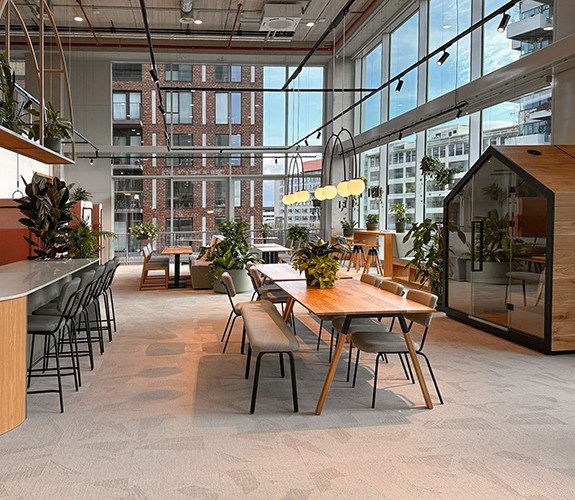
The effect of light is significantly influenced by spatial design. Bright, matte surfaces with a high reflectance distribute light evenly throughout the space and contribute to an overall brighter impression. Darker flooring provides visual stability and balanced contrast. Materials, colors and surface textures therefore directly affect the distribution and perception of light within a space.
At the same time, it is important to ensure that very bright or glossy surfaces do not cause disturbing reflections or glare. A balanced coordination of colors, materials and finishes is therefore essential to create a visually comfortable and functional lighting environment.
Workplace Lighting Between Regulation and Practice
Workplace lighting regulations define clear requirements for lighting at the workplace and provide an important foundation for health, safety and performance. However, the quality of a working environment depends not on compliance with individual requirements alone, but on their holistic implementation.
An effective lighting concept only emerges through the interaction of daylight, artificial lighting, spatial design and actual use. Only when these factors are planned in an integrated way and carefully coordinated do work environments meet both legal requirements and the ergonomic needs of people.
This makes it clear: good office lighting is not an isolated factor, but a central component of a well-designed and sustainable working environment.
FAQ: Frequently Asked Questions About Workplace Lighting
According to DIN EN 12464-1, an office workplace requires a minimum illuminance of 500 lux. For more demanding visual tasks, 750 to 1,000 lux are recommended. For increased visual needs, for example among older employees, up to 1,500 lux may be appropriate.
The key regulations for workplace lighting are the Workplace Ordinance (ArbStättV), ASR A3.4 “Lighting” and DIN EN 12464-1. While the ArbStättV defines the legal framework, ASR A3.4 specifies requirements for illuminance, glare control and lighting quality.
Yes, in principle, workplaces must have sufficient daylight and a visual connection to the outside, as required by the Workplace Ordinance. In justified exceptional cases, deviations are possible if alternative measures ensure adequate health protection.
Insufficient lighting can lead to headaches, fatigue, reduced concentration and visual strain. In the long term, it can negatively affect performance and well-being.
Neutral white light (around 4,000 Kelvin) is generally recommended for office workplaces, as it supports concentrated work. Daylight white light can have an activating effect, but should be used carefully to avoid glare and overstimulation.
ASR A3.4 “Lighting” is a technical rule under the Workplace Ordinance and specifies requirements for illuminance, light distribution, glare control and visual ergonomics in workplaces.
If you are looking to optimize workplace lighting in accordance with workplace regulations or planning a new office space, a holistic approach is essential. Effective work environments result from the interaction of all relevant factors. This is where the difference lies between merely compliant planning and truly functional workplace design.
Request a consultation now!
Let’s shape the future of your workplace together – get in touch with us for individual consulting and collaborative planning.