Agile Working – Flexible Offices for the Future
Agile working needs agile offices
Agile working stands for flexibility and adaptability in the world of work. In today's complex and volatile environment, a company's success depends largely on its ability to respond actively and flexibly to new requirements. This calls not only for the right internal organisation, but also for modern office concepts designed to match it.
Inhalt
1. What does agile working mean?
2. Why does agile working need flexible and agile offices?
3. How does mobile furniture contribute to agile working and flexibility in the office?
4. How does professional technology integration support agile work?
5. Which office zones support agile working in a company?
6. What are the benefits of agile working?
7. What needs to be considered when introducing agile working?
8. Agile working as a future trend for modern working environments
9. Agile offices with coneon
Agile working defined – what does agile working mean?
Agile working stands for modern, flexible working that enables companies to respond quickly and efficiently to dynamic market demands and change. Agile work creates room for innovation and continuous development. Rigid hierarchies are increasingly being replaced by flat structures that favour fast, autonomous decision-making. Originally rooted in software development in the early 2000s, the agile approach has since become established as an organisational model in many other industries. At its heart is the self-organisation of teams that take ownership, reflect on processes and adapt to new circumstances. Successful agile working, however, requires more than internal restructuring – it needs a corporate culture that promotes open communication, flexible structures and a working environment that enables creativity, collaboration and social interaction. This is where modern tools and individual space concepts play a decisive role. Developing new ways of thinking and working is becoming increasingly important – and it also shapes how space is used.
Why agile working needs flexible and agile offices
An agile workplace is the prerequisite for working in an agile way. It must foster flexibility and adaptability – two essential elements of agile work.
Agile working calls for new office concepts that can adapt quickly to changing requirements. A modern, future-proof office should offer open structures that enable different forms of collaboration as well as areas for focused individual work. Alongside the spatial design, the furnishings can also help to support agile working. Multifunctional furniture that combines seating, work surfaces and storage is particularly useful here.
How does mobile furniture contribute to agile working and flexibility in the office?
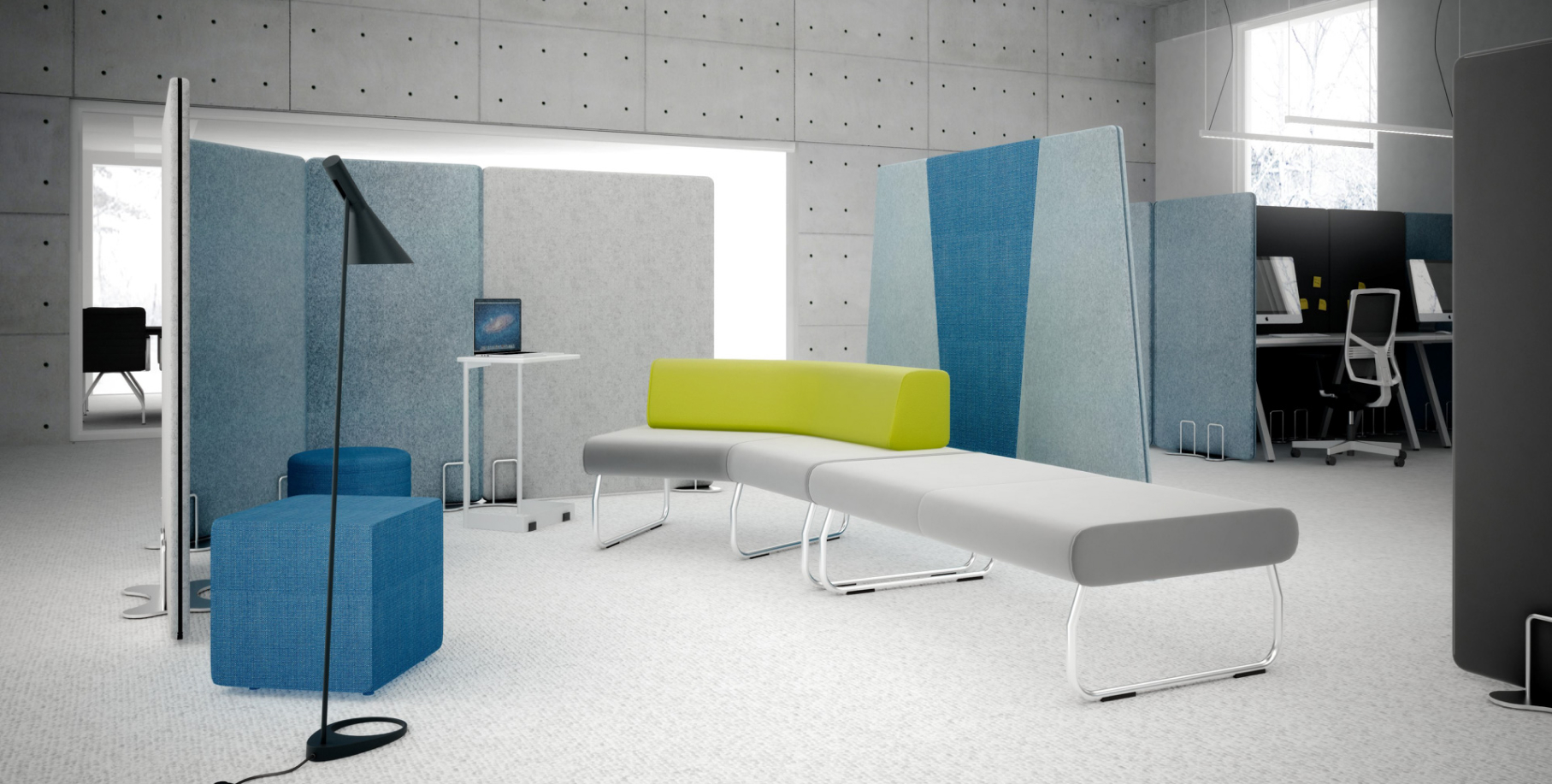
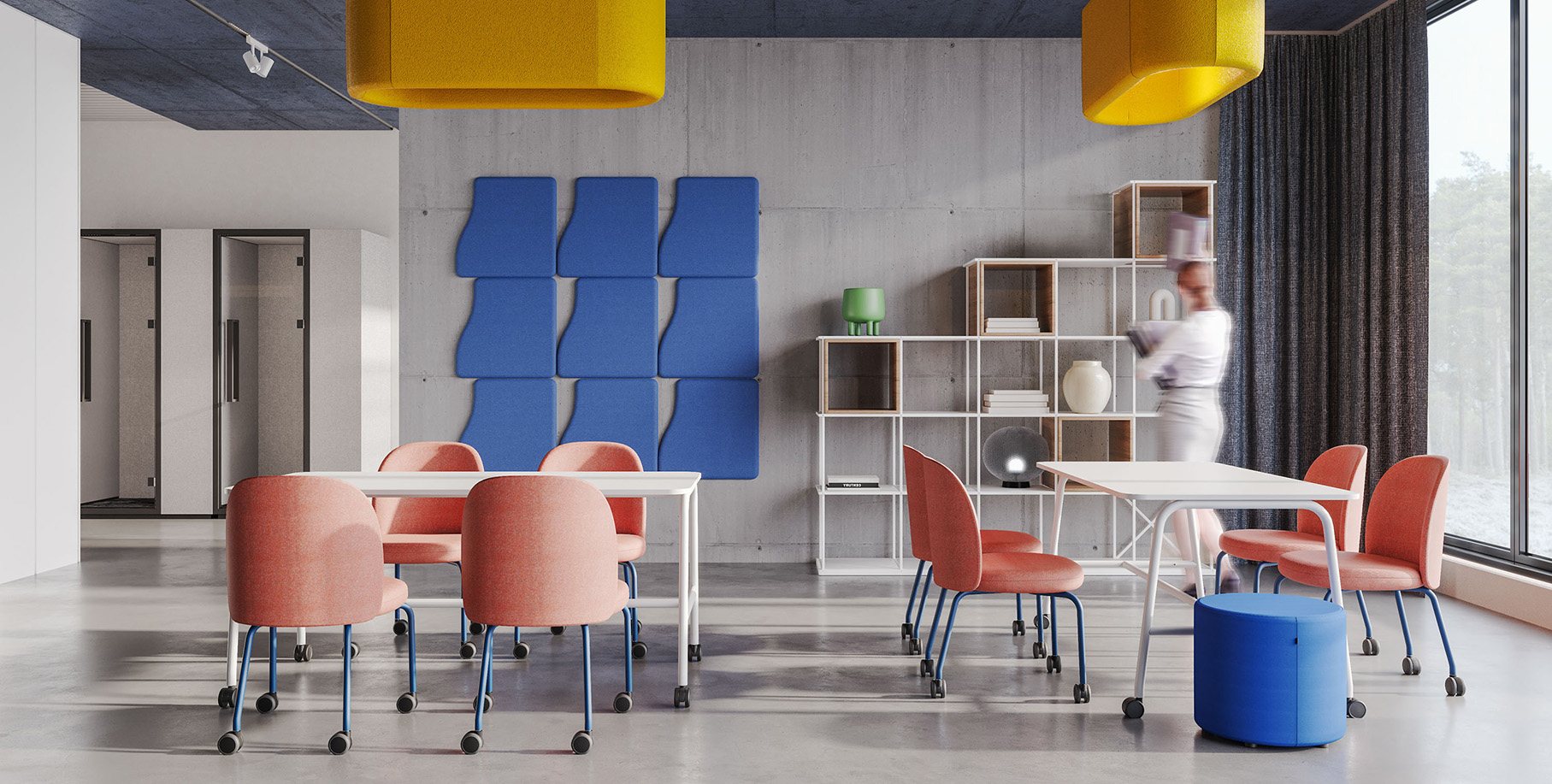
Flexibility is key to keeping pace with dynamic work processes. Agile work is also supported by modular furniture that can easily be rearranged and reconfigured to create different working environments. The principle of "form follows function" is lived out in agile workspaces. Modular systems made up of various basic elements such as multifunctional seating, tables, room dividers and acoustic pods make it possible to create individual work landscapes – from quiet individual workstations to dynamic, more open areas. This furniture can be adapted quickly and easily to create the desired environment in no time. As a result, not only can different working methods be adapted to suit the situation, but the entire interior as well.
How does professional technology integration support agile work?
Technical infrastructure continues to play a central role: high-quality communication equipment and digital tools foster collaboration in virtual spaces too and enable seamless hybrid working. Ultimately, an agile workplace not only increases efficiency but also boosts employee satisfaction by taking their needs and varying working styles into account.
Which office zones support agile working in a company?
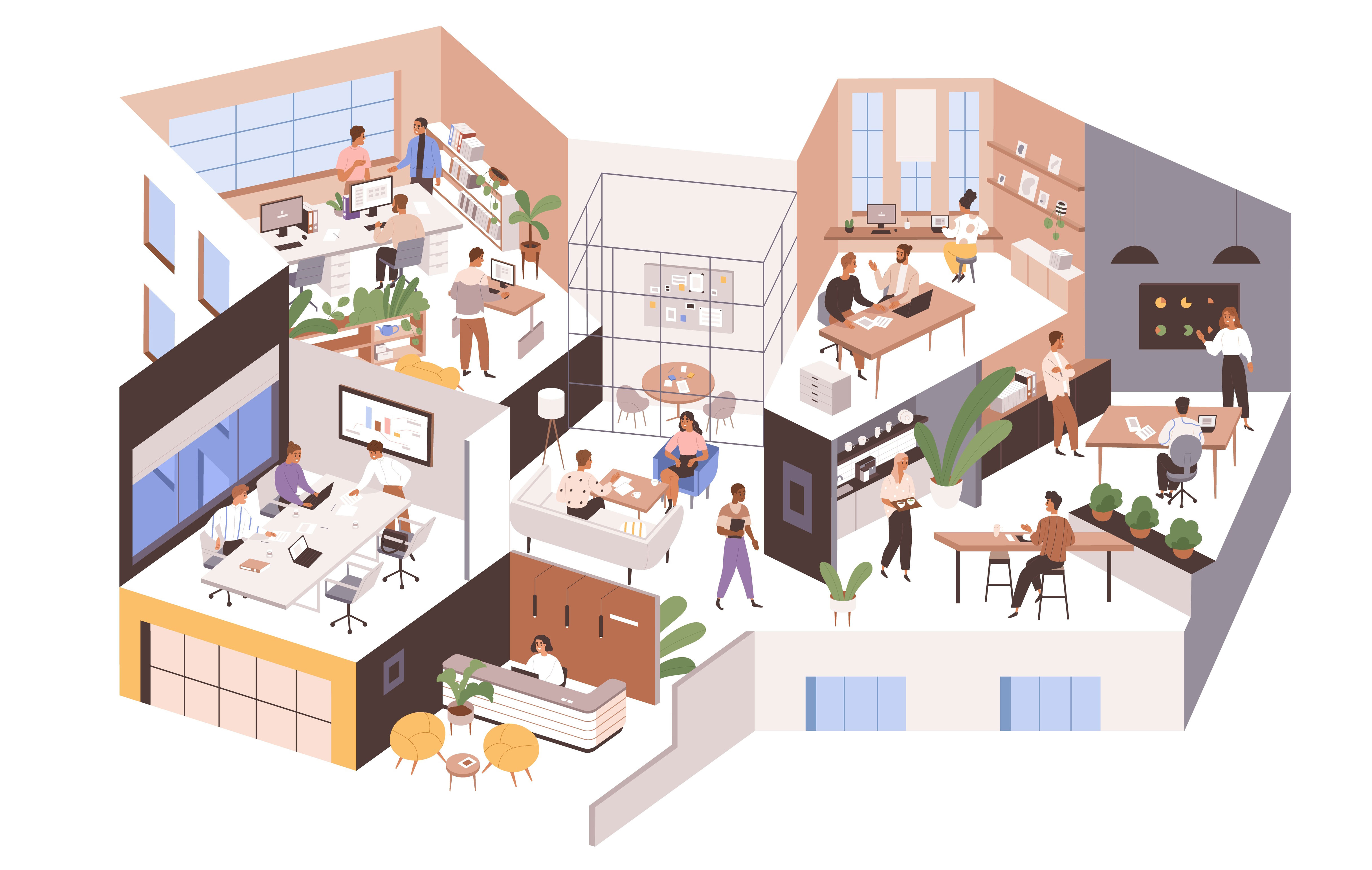
Agile teams need an entire ecosystem of spaces that gives them free choice and control over different zones. These areas support the tasks at hand by providing retreats for focused work, meeting zones for exchange, creative spaces for generating ideas and much more. With an activity-based working environment, processes do not have to be interrupted or slowed down. Informal meetings, for example, can be held at standing tables, which saves time. In addition, areas for exchange and project work as well as for relaxation, such as lounges or cafés, should be planned in. It is important to recognise that highly focused and agile work also requires phases of distraction to recharge.
place2arrive - Reception area
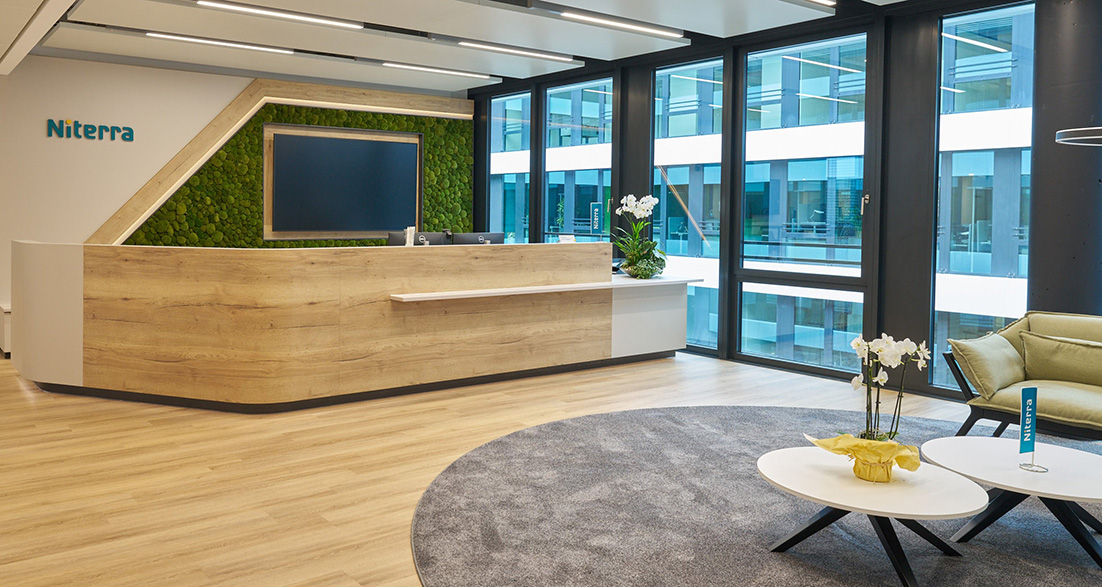
By place2arrive we mean a company's reception and waiting area. The first impression should convey a pleasant ambience and a sense of welcome. The company's corporate design is reflected individually in this area, enabling a confident and customer-friendly presence. An inviting waiting area for customers and guests is also a must.
place2work - Individual work at the workstation
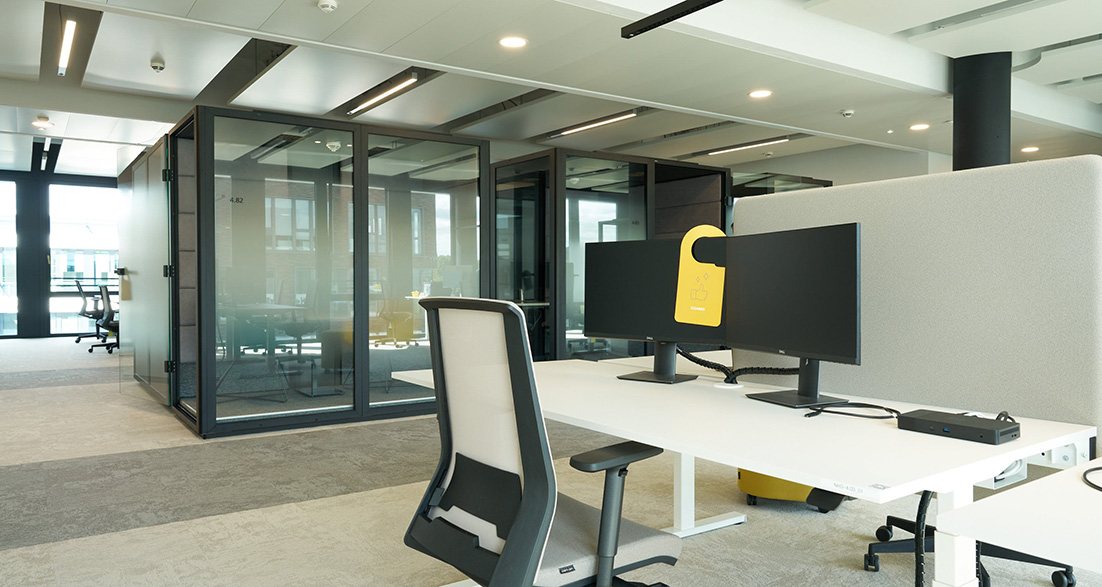
The place2work area covers workstations ranging from small individual offices to large work areas. The focus here is on a good working atmosphere for focused work, created by ergonomic office furniture as well as the right lighting, a pleasant climate and good acoustics. Individual and flexible office furnishings also boost motivation and minimise distractions.
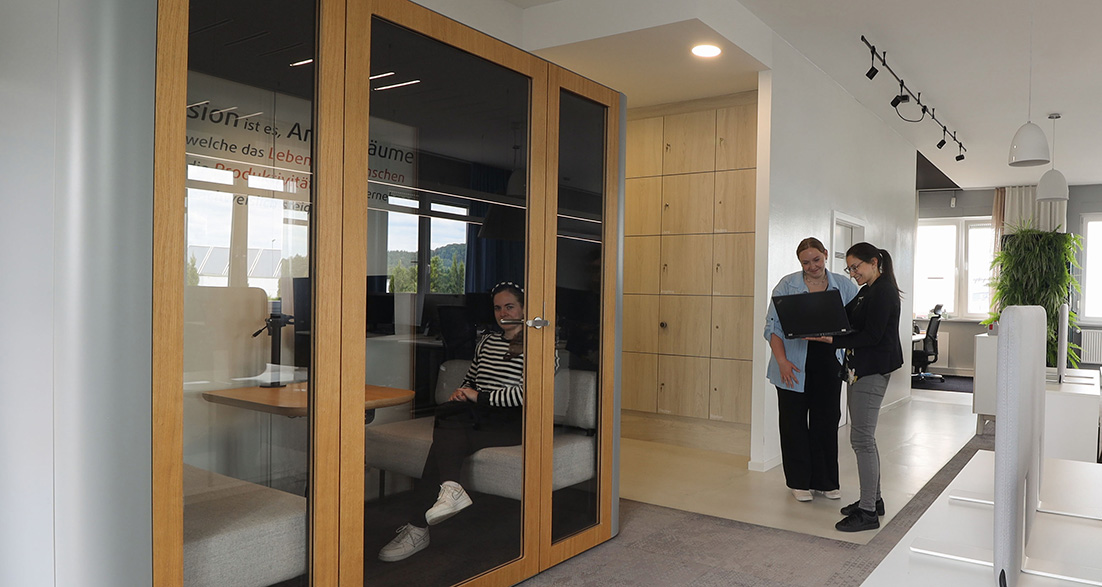
place2focus - Retreat areas in the office
place2focus is the ideal retreat for quiet, focused individual work and privacy. This zone includes acoustic pods, screened individual workstations and phone booths, among other things. The protected setting encourages calm, concentrated work. Phone booths and acoustic pods are ideal for meetings and important phone calls.
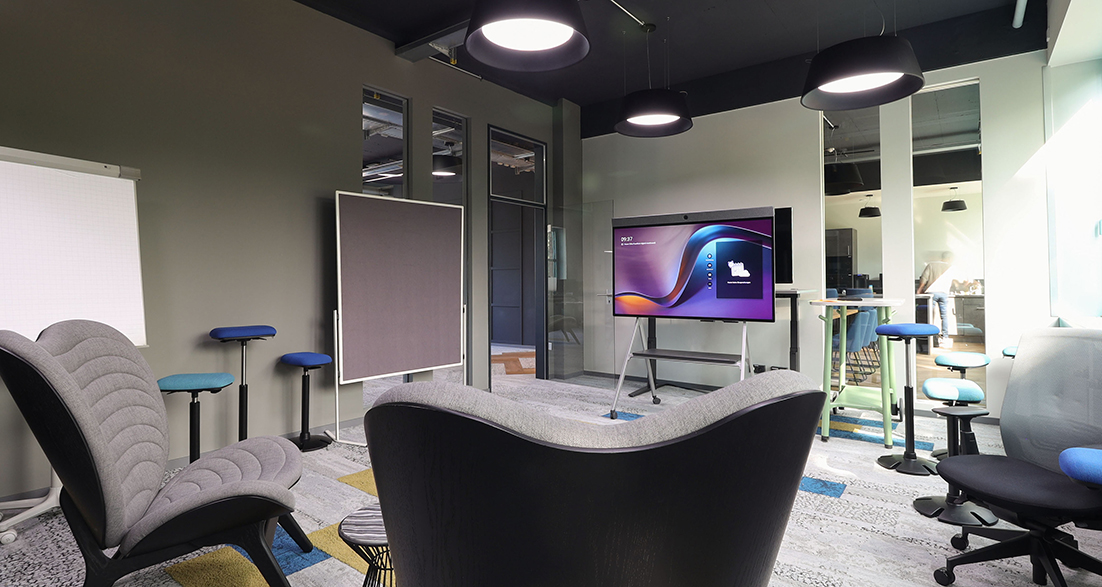
place2collaborate - Project workstations and workshop rooms
Project workstations and workshop rooms make up the place2collaborate area. It offers ample work surfaces and storage for materials, supporting exchange and teamwork on projects. Thanks to flexible furnishings, this area can be redesigned again and again to suit its use and individual preferences. This enables innovative and effective work.
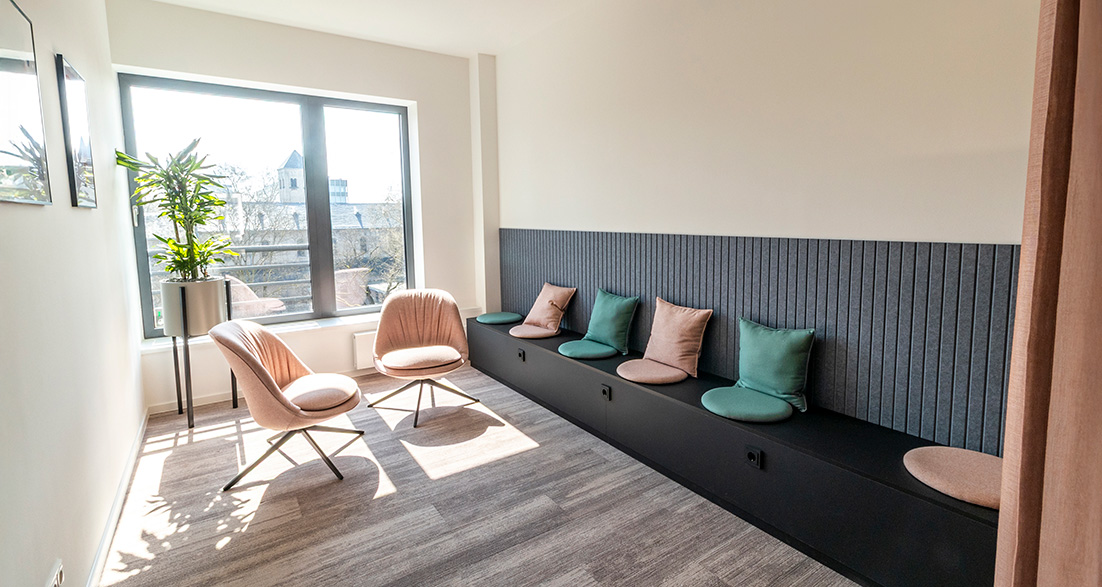
place2relax - Retreats and relaxation areas
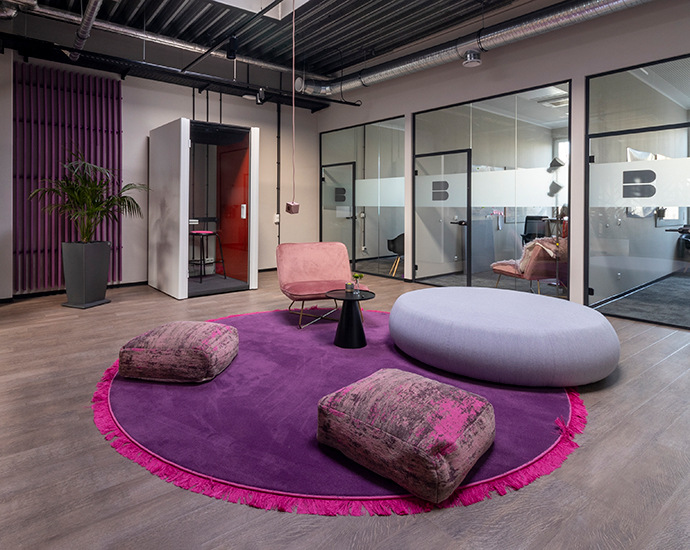
place2relax comprises relaxation spaces for switching off, recharging and unwinding. This retreat area can be designed entirely individually and is tailored to the needs and wishes of the company. Whether a comfortable sofa corner, acoustic pods to withdraw to or swings to switch off – the focus is on relaxation and recharging.
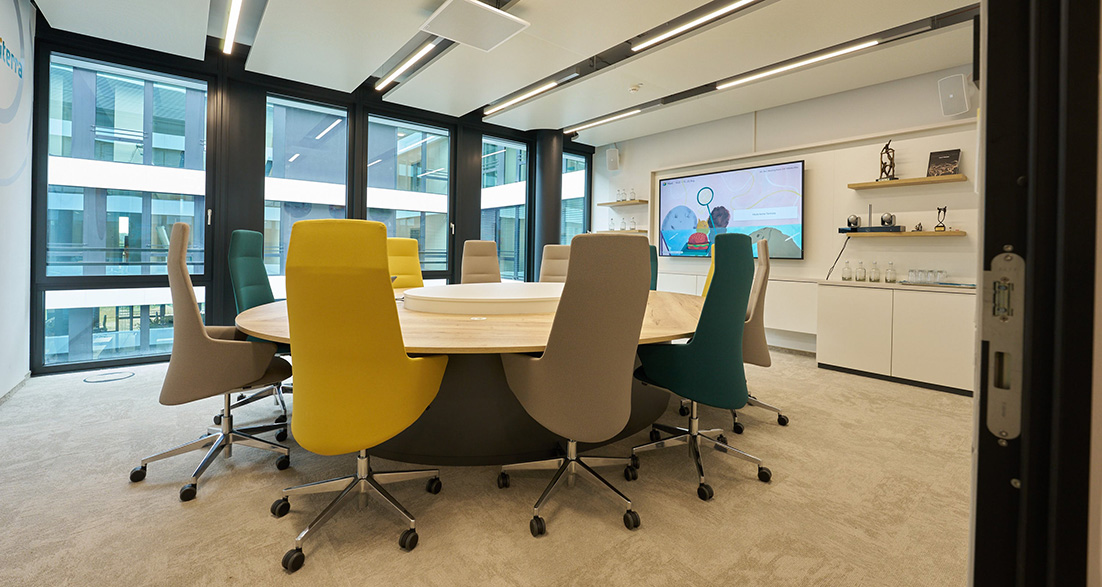
place2meet - Conference rooms and meeting islands
The place2meet area covers spaces for small and large meetings, such as conference rooms and meeting islands. These areas offer privacy and room for everything from group meetings to presentations. Thanks to ergonomic furnishings and an optimised working environment, place2meet is also ideal for longer sessions.
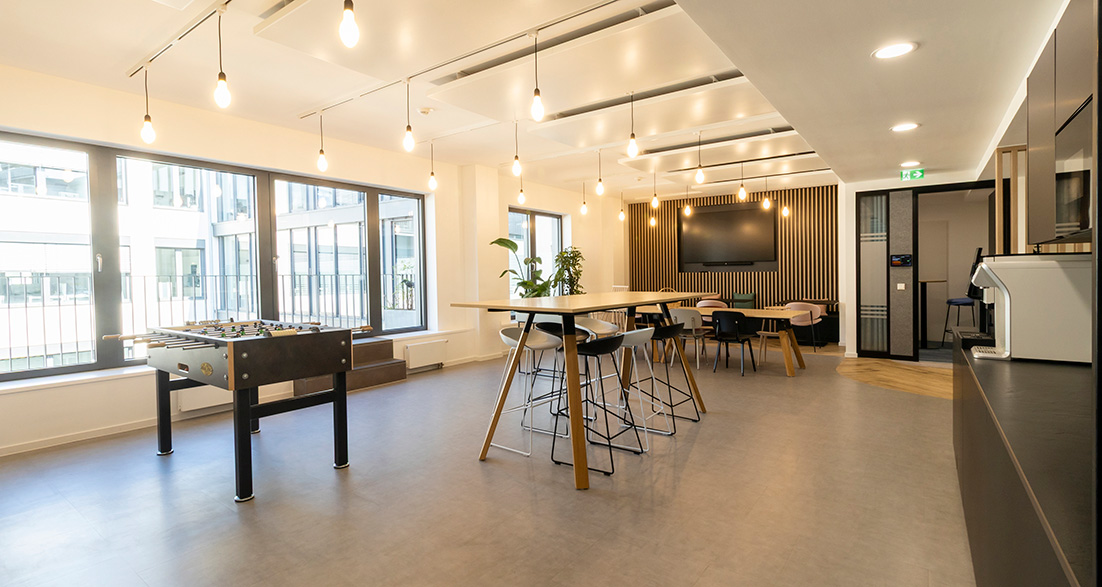
place2socialize - Break rooms and lounge areas
place2socialize includes all areas for breaks and conversations between colleagues, such as kitchenettes, canteens or lounge areas. With seating for shared conversations, they offer a cosy ambience in which to relax and feel at home. Here, work is put aside and a sense of community among employees is created. Well-equipped break rooms are essential for a restful and rejuvenating break.
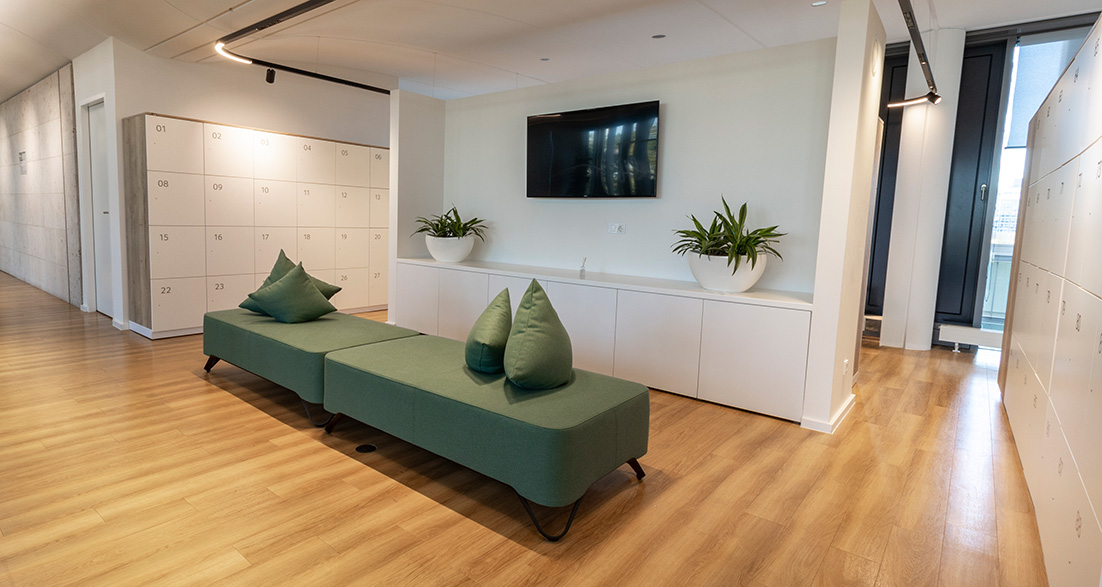
place2store - Storage areas and changing rooms
An area for storage and archiving is a must in any office. place2store provides this space in the form of changing rooms with lockers or rooms with storage options. Individual lockers for employees' personal belongings are also important to keep the workplace tidy. A tidy, well-organised workplace promotes concentration and therefore effective work.
What are the benefits of agile working?
Agile offices are flexible by design. Mobile furniture and appropriate space planning make it possible to quickly implement different scenarios that support a variety of work situations. At the same time, this encourages creative and innovative ways of thinking and working. Results can be improved because the environment can be tailored to the requirements of the task and the people doing it. Modular construction and flexible furnishings allow an immediate response to external change. But the agile working environment is not the only benefit. Agile market developments and industry-specific changes cannot always be predicted in the long term, so it is important to minimise risks. Agile ways of working make companies less vulnerable to rapid or major change. Agile companies can stay competitive and even benefit from change. Organisations become more responsive and meet external market demands and change with greater flexibility. As a result, they often achieve better results than organisations with rigid structures. Internally, teams can adapt projects faster and implement innovations more efficiently. This often leads to better product quality and shorter development times. Agile work also goes hand in hand with greater personal responsibility and teamwork, which in many places leads to higher employee motivation and loyalty to the company.
What needs to be considered when introducing agile working?
To implement agile work successfully, companies need to foster an open corporate culture that values flexibility and collaboration. Employees must understand the principles of agile working, and skills in agile methods such as Scrum or Kanban should be continuously developed. Alongside the reorganisation of internal structures, the technical infrastructure and a working environment that supports the culture must also be in place. An agile culture does not work without space and technology.
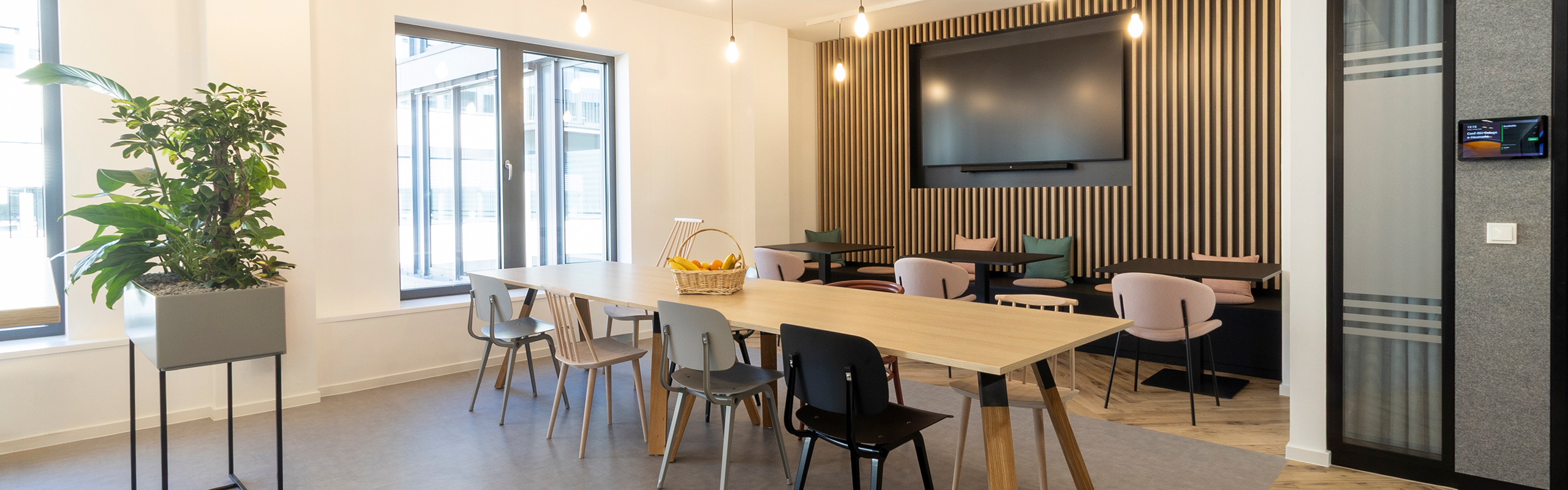
Agile working as a future trend for modern working environments
Agile working goes beyond simply implementing new processes. It requires well-thought-out, flexible offices tailored to the needs of modern working environments. For agile work, rigid structures also need to be broken up in office design to make room for creative and innovative solutions. Modern office concepts such as open spaces, flexible workstations and the well-considered integration of digital tools support this approach. They enable companies to respond quickly to change and collaborate efficiently. Agile working environments support collaboration and knowledge sharing between teams, resulting in a more dynamic and efficient way of working. Agile ways of working can also increase employee satisfaction and productivity by creating room for individual working styles. In an increasingly complex business world, agile working provides the flexibility needed to stay competitive. This puts companies in a better position to respond to change and meet the challenges of the future.
If you would like to set your company on the path to greater agility and a modern working environment, we are here for you as an experienced partner. With our expertise, we support you in designing agile work areas, implementing the right tools and creating an inspiring working environment.
Contact us to shape the future of your company together.
Are you planning a new office design, an office move or a fit-out? Or are you simply looking for ideas for a new office concept?
We look forward to supporting you with your project!